Archive

Tag Archives: Terrorism

Boy, 17, convicted of five sexual assaults against a younger girl
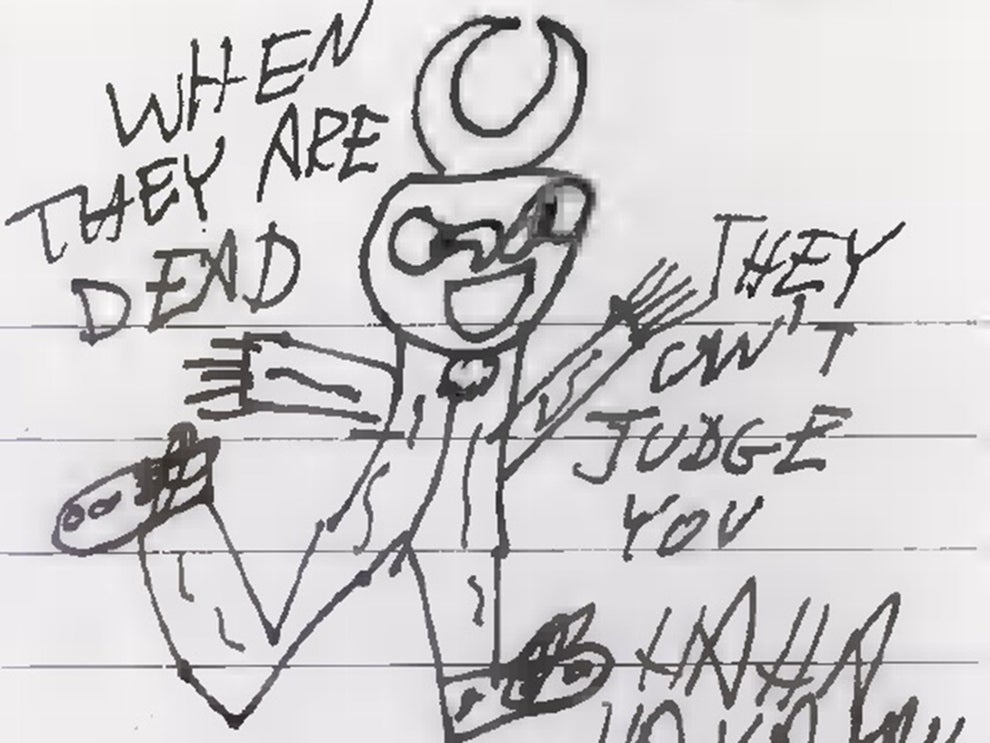
One of the sketches made by the teenager
(Counter Terrorism Policing North East)

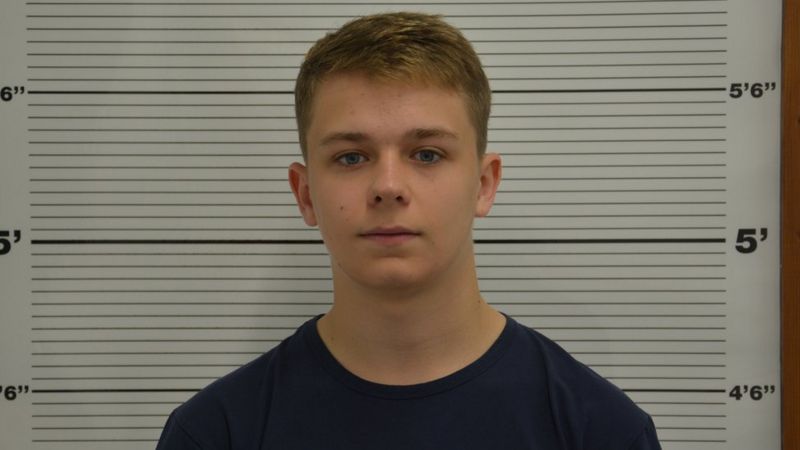
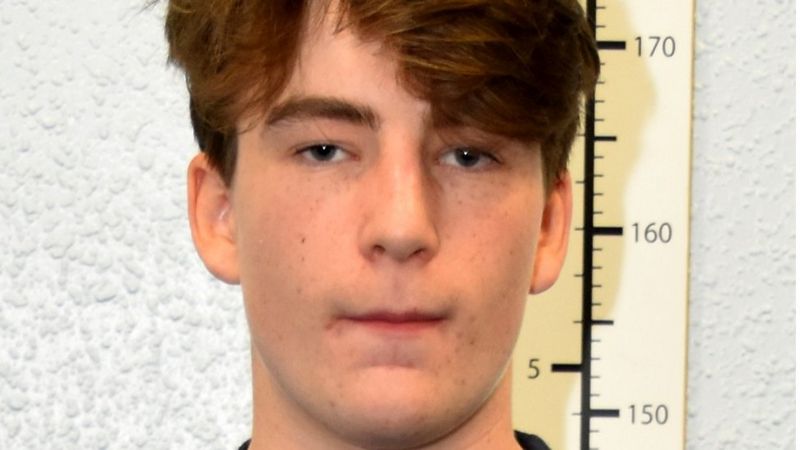
A teenage neo-Nazi who was jailed for planning terror attacks has been given a new sentence for child sex offences.

The 17-year-old boy, who cannot be named for legal reasons, was found guilty of five counts of sexually touching a girl under the age of 13.

He was given an 18-month detention and training order for the assaults at Leeds Youth Court on Wednesday.

District Judge Richard Kitson said the term could be served concurrently to his previous sentence of six years and eight months for preparing acts of terrorism.

“The offences [against the girl] are wholly different to those that have resulted in your current sentence and, in theory, consecutive sentences would be justified,” he told the defendant. “I think that would be inappropriate in view of the extended sentence which you are currently serving.”

The defendant is due to turn 18 this month, meaning the ban on identifying him would expire automatically, but his lawyers have applied to extend the reporting restriction.

At a separate hearing at Manchester Crown Court on Wednesday, Judge Nicholas Dean QC granted an extension until a hearing where the arguments can be considered in full on 11 January.

The boy had detailed plans to firebomb synagogues and other buildings in the Durham area as part of what he believed was an upcoming “race war”.

Before being arrested, he wrote that his upcoming 12 weeks of study leave would be “showtime”.

He was convicted of six terror offences, including preparing acts of terrorism, disseminating terrorist publications and possessing material for terrorist purposes.

A court heard that he had been “tipped off” by a fellow extremist on the Fascist Forge forum that a police raid was imminent and deleted evidence as a result, but police could not corroborate that claim.

When he was arrested in March 2019, police found a piece of paper in his pocket containing a message in code that said: “Killing is probably easier than your paranoid mind thinks. You’re just not used to it.”

The boy was carrying a drawing of a fellow school pupil being beheaded, because he believed he was gay and deserved “judgement”.

After reading Norway shooter Anders Breivik’s manifesto, he had written his own version entitled: “Storm 88: A manual for practical sensible guerrilla warfare against the k**e [offensive term for a Jewish person] system in Durham city area, sieg hiel.”

It called for lone-wolf terror attacks to fight against a supposed “genocide” of white people and listed proposed attack targets in Durham, including schools, public transport and council buildings.

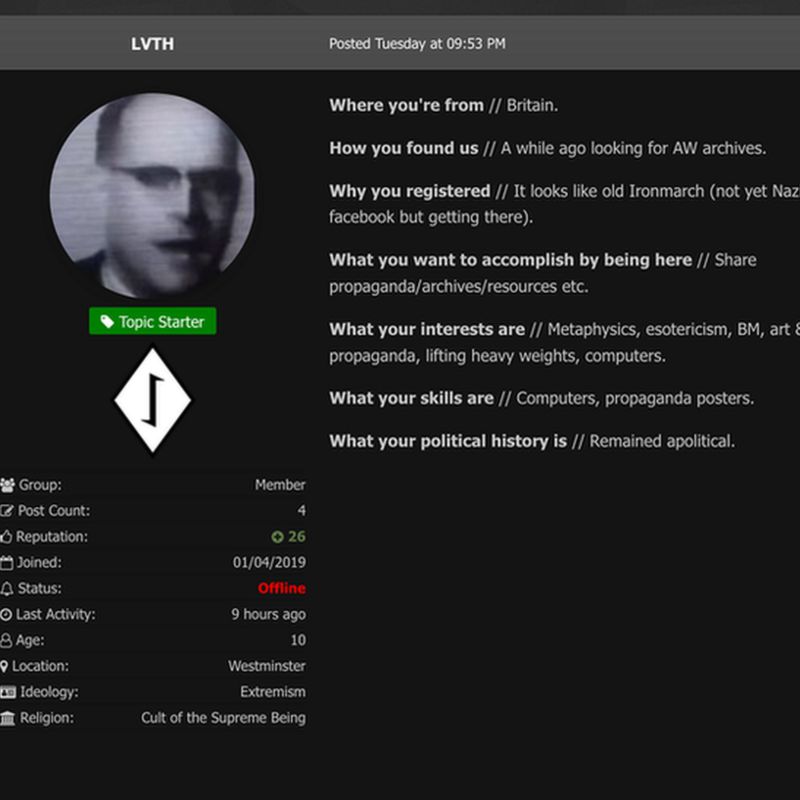
Writing on the Fascist Forge forum, the teenager claimed a race war was “inevitable”, and called himself an “accelerationist”.

Prosecutors said they had not identified a “particular act or acts” of terrorism that the boy was going to commit, but that he had been preparing for some kind of atrocity since October 2017.

He denied all offences, claiming he had adopted the terrorist persona for “shock value” and did not want to carry out attacks, but was convicted unanimously of all charges in November 2019.

The court heard that the boy had been an “adherent of a right-wing ideology” since the age of 13, and that his views became more extreme as he immersed himself in fascist websites and forums.

By 2017, he was describing himself as a neo-Nazi and operated a since-deleted Twitter account with a handle referring to a British fascist leader.

His racist and homophobic tweets drew the attention of police but when he was interviewed in September that year, he claimed they were posted “for a laugh”.

The teenager initially agreed to take part in the Prevent counter-radicalisation programme but later stopped engaging.

The boy claimed he was not an extremist, but started another Twitter account and continued communicating with contacts, while accessing a “large quantity of extreme right-wing literature” online and in hard copy.

The court heard he had steeped himself in antisemitic conspiracy theories and ranted about Jewish governors at his school, Jewish MPs and the press.

In August 2018, he described himself as a “radical national socialist” and follower of Adolf Hitler, saying he had read Mein Kampf and had a photo of the Nazi leader on his phone.

Prosecutors said the boy obtained and shared terror manuals on making explosives and firearms on the Ironmarch and Fascist Forge online forums, but also drew on jihadi propaganda.

He had searched for Isis execution videos and used al-Qaeda literature, as well as a jihadi guide on making deadly poisons, including ricin.

By November 2018, he had progressed to extreme occult neo-Nazism and voiced support for satanism.

The teenager declared his support for the “siege” ideology, which was started by an American neo-Nazi and advocates the use of terror attacks to trigger a race war.

“Democracy is very much a dead system; political violence therefore, can only help us,” he wrote. “The white race is being silently genocided, the west is dying.”

Sentencing him for the terror offences earlier this year, the previous Recorder of Manchester, Judge David Stockdale QC, found the teenager’s subsequently diagnosed autism spectrum disorder played a part in his offending.

He described the youth as “highly intelligent, widely read, quick-thinking and articulate” but told him that it was “a matter of infinite regret that you pursued at such a young age a twisted and – many would say – a sick ideological path”.
The Independent

Filip Golon Bednarczyk claimed he wanted to make fireworks but judge said explanation was ‘fanciful’

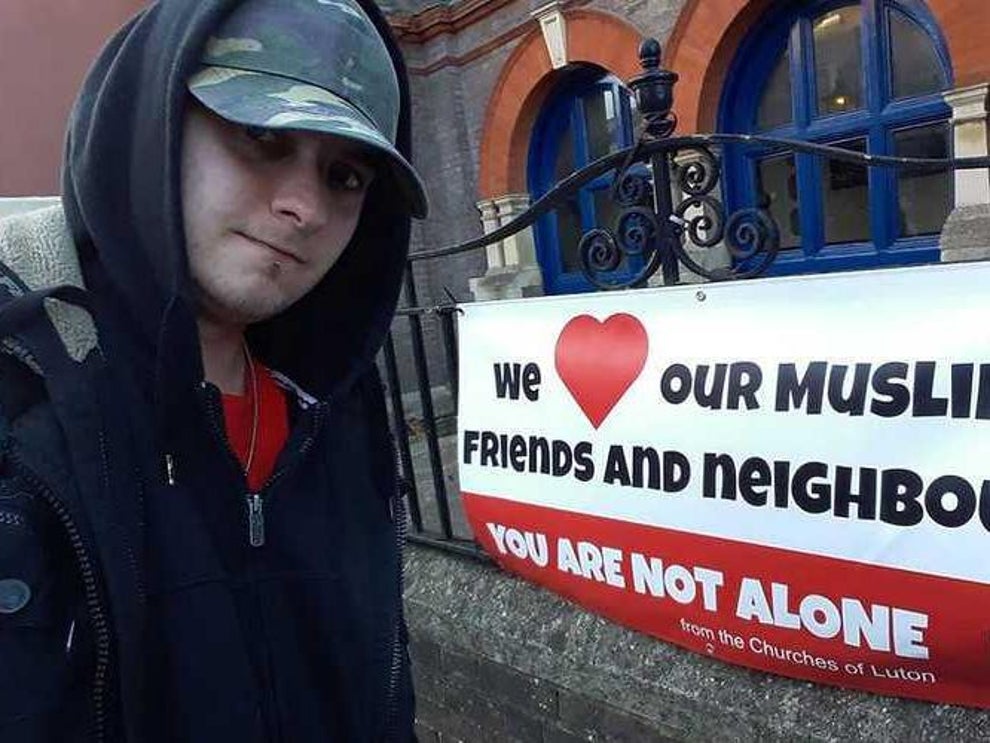
A mocking image of Filip Golon Bednarczyk stood outside a Luton church that was posted on his Facebook page

A far-right extremist has been jailed for possessing explosives and terrorist documents.

Filip Golon Bednarczyk, 26, denied planning an attack or attempting to make a bomb and claimed he was acting on “curiosity borne out of boredom”.

Giving evidence at the Old Bailey on Tuesday, he said he had downloaded numerous terrorist manuals and collected chemicals and components because he wanted to make fireworks.

But a judge said Bednarczyk’s explanations did not “bear scrutiny” and that he was interested in building bombs.

“I find your admitted right-wing sympathies were the motivation for your interest in explosives,” Judge Anthony Leonard QC told him.

“The idea you drew a circular diagram with nails and a detonator because you wanted to create a firework is fanciful … if the instructions had been followed it would have resulted in a working IED.”

Bednarczyk had admitted possessing an explosive substance under suspicious circumstances between May and December last year.

He also pleaded guilty to seven charges of possessing a document likely to be useful to a person committing or preparing an act of terrorism in relation to various titles about homemade explosives and devices.

The judge sentenced him to four years in prison with another year on licence, and handed Bednarczyk a 15-year notification order in which he has to report his personal details to the police.

When entering his guilty pleas, Bednarczyk insisted he did not want to harm anyone and had not attempted to construct a bomb.

He admitted “right-wing sympathies” but denied being a neo-Nazi and said his online research had not focused on particular groups.

An analysis of his electronic devices revealed an interest in firearms, knives and killings as well as extreme right-wing views.

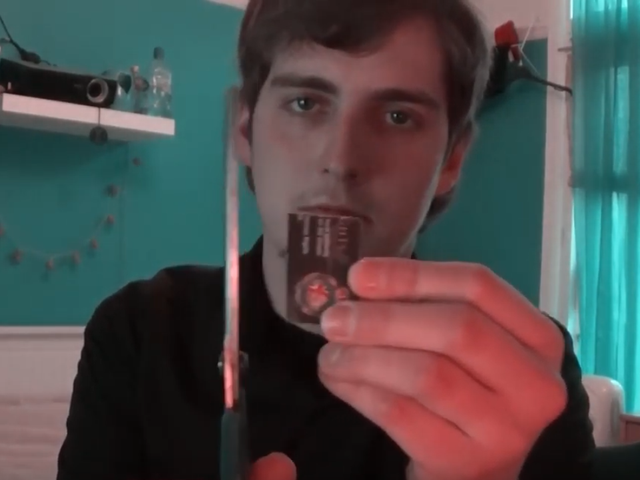
Filip Golon Bednarczyk cutting up a Britain First membership card in a 2017 YouTube video

The Old Bailey heard that he had a copy of the Christchurch attacker’s manifesto, which claimed white people are being “replaced”, and shared memes supporting the terror attack that left 51 people dead.

Bednarczyk had also searched the internet for Nazis, Hitler, the Polish Defence League — an offshoot of the English Defence League — and Britain First.

The Polish national, from Luton, had targeted Muslims, Jews and the gay community in hateful online posts.

In a Facebook post from July 2019, he shared photos of British police officers supporting Pride events and called them “pathetic”, writing: “Death of European culture and values”.

In 2015, Bednarczyk “liked” a meme showing Mecca being destroyed by nuclear weapons, and called for the burqa to be banned.

Another post suggested that “liberal blood will flow in the streets” for the tolerance of Muslims, transgender people, homosexuality, abortion and feminism.

The previous year, he shared an antisemitic meme which originated on 4chan showing world leaders wearing Jewish skullcaps.

On his YouTube channel, which has more than 4,000 subscribers, Bednarczyk uploaded a video of himself cutting up a Britain First membership card in 2017.

He was arrested by detectives from the Metropolitan Police’s counter-terrorism unit on 11 December.

A search of his bedsit led to the discovery of handwritten notes, electrical component parts and a 2kg bag of sulphur powder inside a wardrobe.

Printed bomb-making instructions were found alongside a blank-firing pistol, a soldering iron and USB stick containing documents and images relating to explosives.

Expert analysis of the material was that it included “viable instructions for a range of explosive materials including low explosives, primary high explosives and secondary high explosives” and “viable instructions for a number of types of IED”, prosecutor Dan Pawson-Pounds told the court.

Bednarczyk said he bought potassium nitrate and sulphur over the internet but later tried to return them because he “lost interest” in it.

He said he did not open the sulphur and told the court: “Out of boredom I was thinking about experimenting with the chemicals for a little excitement in the garden.”

The defendant claimed he had forgotten about the items in his wardrobe and had accidentally downloaded terrorist manuals because he was taking documents off the internet “in bulk”.

Judge Leonard said it was not a “coincidence” that Bednarczyk had kept electronic parts that could have been used to make a detonator alongside the ingredients for gunpowder.

The judge said he was previously warned against keeping such material in March 2018, when police confiscated chemicals discovered at Bednarczyk’s home after his partner’s suicide.

Around that time, the defendant confided in a friend that he was concerned about what police would discover if they searched his computer, because he had been looking at how to make a bomb.

The court heard that Bednarczyk, who has a seven-year-old son in Poland, may have exaggerated symptoms of poor mental health during a psychiatric assessment and did not suffer from a condition that affected his culpability.

Defence barrister Beth O’Reilly told the court there was “no evidence of a terrorist connection” in the case, adding: “He describes his interest [in explosives] as curiosity, that interest wasn’t acted on.”

The Independent

Paul Dunleavy was jailed for five years and six months, after a trial at Birmingham Crown Court

A teenager who was part of a banned neo-Nazi group has been jailed for preparing acts of terrorism.

A judge ruled 17-year-old Paul Dunleavy can be named but described his efforts to commit the act as “inept”.

Dunleavy had admitted nine counts of possessing 9 terror manuals and also had videos of the New Zealand terror attack in 2019, in which 51 people died.

At Birmingham Crown Court, Judge Paul Farrer QC jailed the defendant for five years and six months.

Dunleavy, who had denied preparing an attack, had joined a neo-Nazi group called Feuerkrieg Division (FKD) in July last year, the court was told.

The group was created by a 13-year-old Estonian and was outlawed in the UK this summer after being linked to terrorism cases around the world.

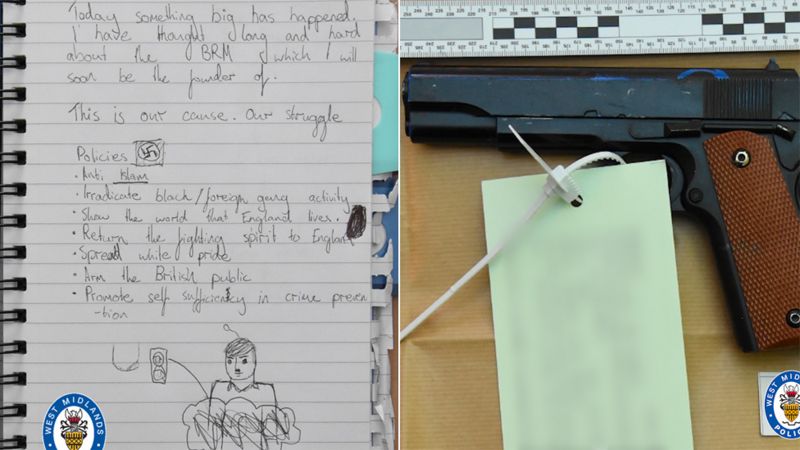
Notepads made by the teenager and a gun were recovered from his room

Judge Farrer said Dunleavy had offered practical advice on firearms to other FKD members, some of whom have gone on themselves to be convicted of terrorism offences in other countries.

The judge told the defendant he harboured an intention to commit an act of terrorism, but added it was unlikely the he would have followed through, describing his preparations as “inept”.

He added: “Your autism impacts on your maturity and understanding.”

Dunleavy had an “unhealthy interest in other attacks across the world”, police said

Prosecutors said FKD’s aim was to overthrow the liberal democratic system by bringing about a race war through individuals carrying out acts of mass murder.

After joining FKD’s online chat group, Dunleavy unwittingly began communicating with an undercover police officer, telling him: “I’m getting armed and getting in shape.”

The court was told Dunleavy had researched how to convert a blank-firing gun and asked an adult friend for advice on where to buy one.

Following his arrest at his home in September 2019, West Midlands Police said detectives seized his phone, finding over 90 documents on firearms, explosives and military tactics, right wing material and online chat conversations.

They also found several knives, air rifles, face coverings, camouflage face paint, shotgun cartridges and bullet casings.

Dunleavy had named Adolf Hitler as one of his heroes, West Midlands Police said

“This boy had an unhealthy interest in other attacks across the world and he knew exactly what online platforms to join to share his extreme views,” said Det Ch Supt Kenny Bell, head of West Midlands Counter Terrorism Unit.

“He believed he had the skills to convert a blank firing weapon into a viable firearm and was willing to help others with his abilities.”

BBC News

A high-achieving grammar school pupil who secretly promoted neo-Nazi terrorism online has been sentenced.

Harry Vaughan, 18, from south-west London, had pleaded guilty to 14 terror offences and two of possessing indecent images of children.

Passing sentence at the Old Bailey, Mr Justice Sweeney said: “You are a dangerous offender.”

He sentenced Vaughan to two years detention in a young offenders’ institution, suspended for two years.

The 18-year-old was also ordered to attend a rehabilitation programme.

The judge said Vaughan had lived at home with his family and been an “A* student”, adding none of them knew that from the age of 14 he had been involved with groups on the internet.

Vaughan’s father, who was in court, is a clerk in the House of Lords and his mother is a teacher. Vaughan had been a pupil at Tiffin Grammar School in Kingston upon Thames.

The judge told the teenager neo-Nazi material found during police searches showed “the depth of your extreme right-wing mindset”.

He added that expert evidence stated Vaughan’s ideology was a “hybrid” of neo-Nazism and left-hand path Satanism.

Vaughan was prolific online and hid behind a series of aliases.

He uploaded self-made propaganda images to a neo-Nazi website promoting the now-banned terrorist organisation Sonnenkrieg Division.

He also possessed – and posted online – a series of weapons and explosives manuals.

The 18-year-old previously pleaded guilty to 12 counts of possessing documents useful to a terrorist, one count of encouraging terrorism, and one of disseminating terrorist publications.

He also admitted two counts of possessing indecent images, relating to videos showing young boys being raped.

Commander Richard Smith, head of the Met Police Counter Terrorism Command, said: “What this case tells us is that anybody can be affected, anybody can be radicalised.”

He said Vaughan is a “very intelligent young man” but he “now has convictions for terrorist offences which will stay with him for life and I think that is a saddening case and also a salutary example of how this can affect young people”.

BBC News

The son of a House of Lords clerk was a neo-Nazi Satanist who encouraged terrorism, a court has heard.

Prosecutors said Harry Vaughan, 18, had an “extreme right-wing and racist mindset”, and “an interest in explosives, firearms and violence”.

An Old Bailey sentencing hearing was told he had also downloaded indecent videos of children.

Vaughan, from south-west London, admitted 14 terror offences and two of possessing indecent images.

Extreme fringe

Prosecutor Dan Pawson-Pounds told the court Vaughan, who had been a pupil at Tiffin Grammar School in Kingston upon Thames, held a “hybrid” ideology “of left-hand path Satanism” and “accelerationism” – a belief that an inevitable collapse of civilisation should be brought about through acts of terrorism and criminality.

“Both these doctrines are at the most extreme fringe of Satanism and neo-Nazism,” he said.

The court heard Vaughan, a “focused and able” pupil who achieved A* in his A-Levels, was arrested in his bedroom in June 2019.

It was the result of an investigation into Fascist Forge – an online neo-Nazi forum where terrorism and sexual violence were openly encouraged.

Vaughan uploaded self-made propaganda images to the website promoting the now-banned terrorist organisation Sonnenkrieg Division.

He posted the pictures in a chat thread containing responses from two users – a 16-year-old boy from Durham and a younger teenager from Connecticut – who would later be involved in a terrorist attack plot.

The court heard he had earlier applied to join another British group – System Resistance Network – since outlawed as an alias of the neo-Nazi terror group National Action.

‘Have you got the others?’

His application had vowed he would do anything if he “thought it essential to the cause” and was accompanied by a poster saying: “Muslims Beware – Generation of Revenge – Islam Free Zone”.

Notes and search terms found on Vaughan’s devices included “where to cut to get most blood” and “annihilate females”.

Officers found a list of 129 internet accounts, usernames and passwords on a memory stick in his bedroom, and a large volume of extremist material totalling about 4,200 images and 302 media files.

Upon his arrest last summer, Vaughan asked detectives: “Have you got the others?”

But he refused to answer questions during police interviews and it is still unclear how he first became radicalised.

Police were unable to recover information relating to many of his earlier online activities due to Vaughan resetting his computer.

One document he created in 2018 included an address for an online alias – LionAW – associated with the American militant organisation Atomwaffen Division.

In mitigation, Naeem Mian QC said the defendant “intimates he was groomed” and “knows what he did was wrong”.

He said an expert report suggested that Vaughan was on the “autistic spectrum”.

Vaughan admitted 12 counts of possessing documents useful to a terrorist, one count of encouraging terrorism, and one of disseminating terrorist publications.

The indecent images offences relate to two videos of young boys being raped.

Vaughan will be sentenced on 23 October.

BBC News

The teenager, who cannot be named because of his age, told police he was “a nine to 10” on a scale with “full on Nazi Hitler” as a 10

A 17-year-old youth has been found guilty of preparing for acts of neo-Nazi terrorism after researching how to convert a blank-firing gun into a live weapon.

The teenager, who cannot be named because of his age, told police he was “a nine to 10” on a scale with “full on Nazi Hitler” as a 10.

Jurors at Birmingham Crown Court deliberated for more than 15 hours over four days before unanimously convicting the boy of preparing for terrorist acts between April and September last year.

The defendant closed his eyes as the verdict was delivered, then sat down with his head propped on his hand as members of his family wept in the nearby public gallery.

The youth, from Rugby, Warwickshire, told the court he had not intended any act of terrorism, and “had existed in an echo chamber” of far-right chat rooms.

At the start of a month-long re-trial, prosecutor Matthew Brook said the evidence showed the teenager wanted to create a firearm capable of “smashing heads” after joining the so-called Feuerkrieg Division (FKD).

The youth, who was convicted on Friday, saw his original trial halted in March due to the national Covid-19 lockdown.

In his opening speech to jurors, Mr Brook said the boy had praised the terrorist who carried out a mass shooting last year in Christchurch, New Zealand, killing 51 people at two mosques.

Mr Brook told the jury panel: “In this case, the evidence will prove that the defendant became radicalised so he fully believed in extreme right-wing ideology.

“He came to believe an ideology which thinks a race war is coming, an ideology which believes its followers should bring about a race war, should accelerate its start, so that the white race can become supreme.

“He came to believe in an ideology which praises terrorists who carry out mass shootings, like the Christchurch shootings in New Zealand, and called the perpetrators of such terrorist massacres ‘saints’.”

The court was told that the boy, who had admitted possessing documents likely to be useful to a terrorist, researched how to convert a blank-firing gun and had offered advice to members of neo-Nazi chat groups.

Jurors also heard the youth was admitted to an online neo-Nazi grouping after completing a “test” survey in which he expressed a hatred for Jews.

In one series of chatroom messages, the defendant said he was an administrator for a group named League of Nationalists, which was “probably” not going anywhere, but added: “Whatever happens I’m going to have a local unit.

“I’m working on the propaganda and the weapons. I need men.”

Following the youth’s arrest last September, it emerged he had asked an adult friend for advice on where he could buy a blank-firing gun.

In interviews conducted around a fortnight after his home was raided, he was asked to explain gun-making instructions found on his phone, and knives and a home-made gun stock seized from his bedroom.

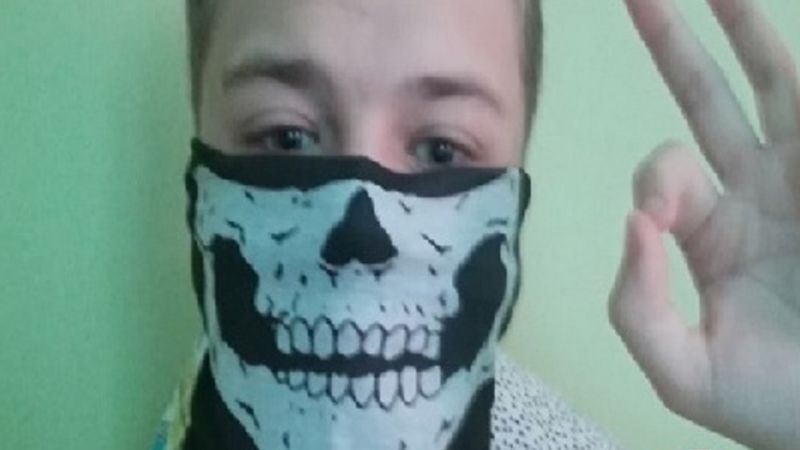
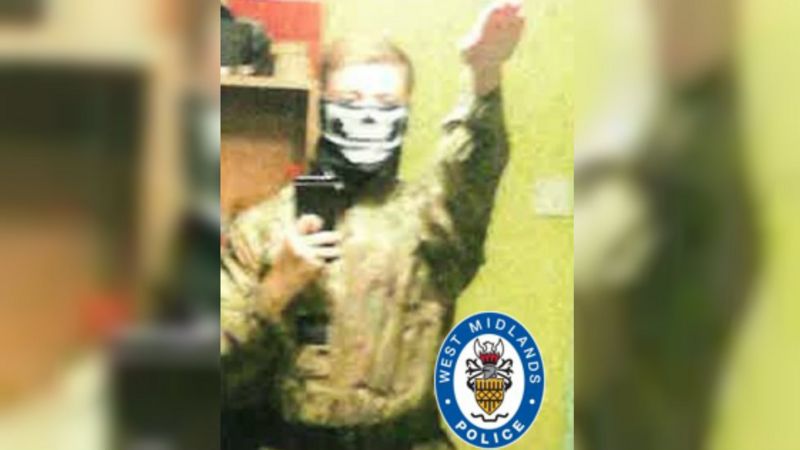
A rubber “practice” knife, a face-mask featuring an image of a skull, and a piece of aluminium pipe were also recovered, along with sketches of gun designs.

Mr Brook said of the boy’s exchanges with other members of neo-Nazi forums: “They had discussed their extreme dislike for some racial groups and he had also talked to them about making firearms and specifically about using blank-firing guns as a basis to build functional weapons.

“He said to the police that he had held right-wing views for a number of years, but he had recently been talking to more extreme people.

“He claimed that, although he had been discussing with these people about converting guns, it had in fact all been a fantasy and he had not done anything in the real world.

“When asked to put himself on a scale of one to 10, with 10 being, in the police’s words, ‘full-on Nazi Hitler’ – when asked to put himself on that scale – he said he was a nine to 10.”

Judge Paul Farrer QC remanded the defendant in custody until a sentencing hearing on November 6.

He told the boy’s barrister: “There’ll have to be a sentencing exercise to embrace not only this count but also the other nine charges he pleaded guilty to in relation to the nine expedient documents – the terrorism documents, as within the Terrorism Act.

“He’s still only 17 years old, he was 16 at the relevant time.

“While the nature of the sentence may be inevitable, the court is going to benefit from having some input from the youth offending team.”

Birmingham Mail


A man accused of storing grenades, mines and chemical weapons at his farm had an interest in Nazi Germany and white supremacy, a court has heard.

Russell Wadge was charged after counter-terrorism police raided his property in Trimsaran, Carmarthenshire.

Newport Crown Court heard large stocks of chemicals found in June 2019, “could kill or injure” when combined.

Mr Wadge, 58, denies 28 charges of possessing explosive devices and chemical weapons.

The court heard Mr Wadge “proudly admitted” making hydrogen cyanide, “one of the most rapidly acting poisons known to man”.

‘Cyanide in freezer’

Tom Little QC, prosecuting, said: “We need to consider the B – word – not Boris but Brexit.

“There were those frustrated by the delays to the Brexit process who were agitating, but they did not have access to this range of chemicals.”

He said hydrogen cyanide was discovered in the freezer, and a pint-glass containing a liquid with a sticker indicating poison was found “between the salad cream and ginger beer” in the fridge.

The jury heard internet searches showed significant interest in the white supremacist terror attack in New Zealand in 2019.

When questioned by police, Mr Wadge said he did not believe in any extremism and had a “keen interest” in chemistry.

However, Mr Little said: “This is not a case about naïve enthusiasm in chemistry – we say it is so much more.”

The jury heard books describing how to make improvised plastic explosives, three jars of gunpowder and the ingredients to make a “very dangerous explosive” called TATP (triacetone triperoxide), as used in the Manchester Arena bombing, were found.

Boxes of grenades, mines and scale drawings of a KGB weapon to deploy hydrogen cyanide were also discovered and Mr Wadge had researched an antidote, Mr Little said.

The prosecution said the accused man told police, “if it’s dodgy or poison, I love it” and sought out restricted information for “the thrill or buzz of it”.

Mr Wadge earlier admitted five charges of unlawful possession of poisonous chemicals without a licence.

The trial continues.

BBC News

Harry Vaughan, 18, arrested by police during a probe into website Fascist Forge
Detectives found memory stick in his bedroom with details of 128 other accounts
Court documents say there was content linked to an American neo-Fascist book
Some was found on USB with Tiffin School in London logo, where Vaughan went

A former pupil at an elite grammar school has admitted downloading and distributing bomb-making manuals.

Harry Vaughan, 18, was arrested by police during a probe into a website named Fascist Forge, which calls itself a ‘home for the 21st century fascist’.

Detectives found a memory stick in his bedroom with details of 128 other internet accounts, including one for System Resistance Network, which supports white supremacy and attacks immigration and gay rights.

Court documents revealed there was also content linked to an American neo-Fascist book called Siege and neo-Nazi, anti-Semitic and Satanic material.

Some of it was found on a USB stick carrying the logo of Tiffin School, the grammar Vaughan had attended in Kingston, south-west London.

When he was arrested last June he was studying for A-levels in maths and computer science and was said to be among Tiffin’s best performing pupils.

The school, which counts former England cricket captain Alec Stewart among former pupils, accepts just 140 students a year from 1,300 applicants. It boasts that 85 per cent of its A-level grades are between A* and B.

Police discovered that in January last year, when Vaughan was just 16, he had published three images and a message on Fascist Forge that were intended to encourage terrorism.

He also published two links on the website to a publication called Wrong Hand: popular weapons manuals and their historic challenges to a democratic society.

Police discovered a wealth of terrorist material on his computers, including a manual with chapters on murder, rape, kidnap, arson and bombing.

He also had documents showing how to make ‘new and improved’ C-4 and Semtex plastic explosives and how to construct a homemade detonator.

Further searches of his electronic devices revealed he had downloaded two indecent photographs of children between April 13 and June 14, 2019.

Vaughan, who lives in Twickenham with his parents and two younger sisters, was charged on March 11 this year.

He appeared at Westminster Youth Court yesterday to plead guilty to 12 counts of possessing documents useful for terrorism, two counts of encouraging terrorism and two counts of possessing indecent images of children.

Addressing the teenager’s parents at the back of the court, chief magistrate Emma Arbuthnot said: ‘It is a nightmare situation for parents but it is important that you are here to support him.’ Vaughan will appear at the Old Bailey for sentencing on October 2.

His bail conditions state he is not permitted to delete the internet history on any digital device or to create a social media profile under any name other than his own.

He has to share his browsing history and passwords with police and may not share extreme Right-wing ideology.

And he is not allowed to possess or use any digital device capable of accessing the internet save for a nominated digital device and his family’s smart TV.

Daily Mail

The chemical engineer claimed he was making fireworks at HMP Wakefield

A white supremacist who stabbed an elderly man to death and planted home-made bombs at mosques has admitted making an explosive substance in his cell at a maximum-security jail.

Self-radicalised extremist Pavlo Lapshyn, 32, a chemical engineer, used salt, copper wire, pencil and other substances to form an ingredient which could be used to cause an explosion.

When officers at the category A prison HMP Wakefield found a plate with a white substance on it in his cell in August 2018, he told them he was trying to make a firework.

HMP Wakefield is known as Monster Mansion due to the number of high-profile, high-risk sex offenders and murderers there.

Lapshyn, a Ukrainian national, had just started a work placement in the UK when he murdered 82-year-old Mohammed Saleem in Small Heath, Birmingham, by randomly stabbing the grandfather in the back with a hunting knife in 2013.

In the following months he planted bombs near mosques in the West Midlands, later stating his aim was to start a race war.

Since he was jailed for life with a minimum term of 40 years he has been assessed by psychiatrists and has an autism diagnosis along with “significant mental health problems”, Leeds Crown Court heard.

He pleaded guilty to making an explosive substance via a videolink from HMP Whitemoor, was heard singing at points during the hearing and declined to be present when Judge Tom Bayliss QC passed a two-year jail sentence.

Peter Hampton, prosecuting, said Lapshyn admitted to officers that he had been preparing chemicals during their routine search of his cell and they informed counter-terrorism specialists in the prison.

They knew of his background as a chemical engineering PhD student, his racially-motivated murder and explosives campaign, and “a long-standing interest in pyrotechnics”, Mr Hampton said.

The defendant told officers he was trying to produce potassium chloride. A smell of bleach could be detected in the cell.

A forensic expert who was called in determined Lapshyn had formed a viable explosive substance.

Attempts were made to interview the defendant about this, the court heard, but he was unable or unwilling to assist.

After moving to HMP Whitemoor, he wrote a chemical formula on his cell wall which he said was related to pyrotechnics.

Searches of his cell there found he was hiding substances including vinegar, artificial sweetener and salt.

Mr Hampton said of his offending at HMP Wakefield: “The defendant’s actions clearly caused the risk of explosion or fire within a category A prison, potentially to harm officers, other prisoners or Mr Lapshyn himself, and interferes with the general running of the prison.”

Judge Bayliss said it was right for the CPS to bring the prosecution but he would not pass a consecutive sentence as Lapshyn – whom he described as a “highly intelligent man” – was already serving a minimum term of 40 years.

He said: “He wouldn’t even be considered for release by the Parole Board until he is 65 and he is very unlikely ever to be released given his position.”

Manchester Evening Post

Jacek Tchorzewski had links to Sonnenkrieg Division terrorist group


A neo-Nazi has been jailed for possessing indecent images of children and extreme pornography.

Jacek Tchorzewski, who had links to the Sonnenkrieg Division terrorist group, was imprisoned for terror offences last year.

But the 19-year-old has now been sentenced at Harrow Crown Court for downloading videos, photos and animations depicting child rape, incest and “sexual interference with a corpse”.

The court heard the material was discovered after police stopped Tchorzewski at Luton Airport on 20 February last year.

He had been about to board a flight back to Poland after visiting his mother, who lives in High Wycombe.

Prosecutor Margia Mostafa said officers who seized his phone and two laptops discovered “evidence of child pornography” as well as far-right terrorist material.

“The contents of the images are fairly distressing,” she added, saying there were four videos in the most serious category showing the rape of boys and girls as young as five.

Ms Mostafa said the victims shown included boys and girls, adding: “They have been clearly groomed and there is suggestion that these children are forced to smile at the camera.”

Tchorzewski also admitted possessing more than 500 images of extreme pornography, which mainly related to animations of characters from a popular children’s cartoon having incestuous sex.

He pleaded guilty to three counts of possessing indecent images of children and one of extreme pornography, including material depicting “an act which involved sexual interference with a corpse”.

Judge Anupama Thompson sentenced Tchorzewski to eight months’ imprisonment, which will run concurrently to his previous four-year sentence for possessing neo-Nazi terror manuals.

“It seems to me that as far as the public interest is concerned, there is nothing to be achieved from extending your sentence further from the one you are currently serving,” the judge added.

“Considerable time has passed since you were originally arrested and had things should be done as they should have, these would have been dealt with by the Central Criminal Court [during the terror case].”

Tchorzewski, wearing a blue-T-shirt and glasses, with a long hair and beard, remained impassive as he was sentenced on Wednesday.

The court heard that probation workers had been “trying to engage the defendant generally on his offending behaviour, but have not had a great deal of success”.

Robert English, for the defence, said Tchorzewski told him the images were downloaded when he was between 15 and 17.

“I asked him why he had those images and he says he was younger then, he had a curiosity, an interest,” he told the court.

“He has no interest now and it’s just something that occurred earlier in his life.”

Mr English said Tchorzewski was originally from Poland and had a “disjointed upbringing” moving between his father in that country and mother in the UK.

A pre-sentence report drawn up after his terror conviction said he was “self-contained and isolated”, had been bullied and struggled to form friendships and communicate.

Mr English said Tchorzewski was suspected to have autism spectrum disorder but there had been no formal diagnosis, adding: “These various traits … resulted in a lot of time spent alone on the internet.”

In September, he was jailed after pleading guilty to 10 counts of possessing documents useful to terrorists.

That court case heard that he also had Satanist literature depicting rape and paedophilia at his home.

The Metropolitan Police said Tchorzewski had “amassed a plethora of guides on terrorism, bomb making and gun production”.

He was friends with Oskar Dunn-Koczorowski, a leading member of the banned neo-Nazi terrorist group Sonnekrieg Division.

Dunn-Koczorowski, who was a previous member of National Action, was jailed for terror offences last year after inciting terror attacks on targets including Prince Harry.

Co-defendant Michal Szewczuk, also a Polish national, ran a blog that encouraged the rape and torture of opponents, including small children, and Dunn-Koczorowski wrote about decapitating babies.

Tchorzewski’s phone contained several pictures of him and Dunn-Koczorowski posing with a Nazi flag and performing Hitler salutes.

Police found Tchorzewski had an array of extreme right-wing material praising Hitler, neo-Nazism, Satanism, antisemitism and calling for genocide.

At the time commander Richard Smith, head of the Met’s Counter Terrorism Command, said: “Tchorzewski’s obsession with neo-Nazism, terrorism and weaponry was not harmless curiosity.”

The Independent