Archive

Tag Archives: mosque conviction

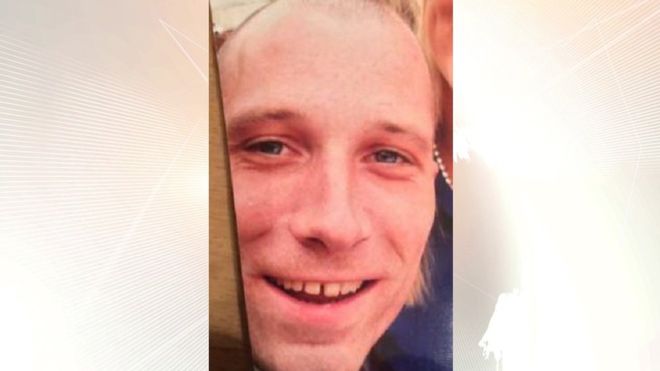
A man has admitted he was responsible for racist graffiti at a Fulwood mosque.

Gavin Edghill, 47, of Lower Bank Road, Fulwood, pleaded guilty to five counts of racially aggravated criminal damage, one offence of racially aggravated public order and a further five counts of criminal damage.

Police launched an investigation after three separate reports of offensive and racist graffiti at Masjid E Salaam Mosque in Watling Street Road over the weekend.

Similar graffiti was found on an NHS sign nearby.

Edghill was arrested and appeared at Preston Magistrates’ Court today (Tuesday 23 April).

He was remanded in custody and will be sentenced in May.

Blog Preston

Steven Bishop, 41, had become fixated on the youngest victim of Manchester Arena attack

A violent racist with a history of mental health problems who admitted a terrorist offence and stockpiling equipment to bomb a mosque has been jailed for four years, one of the lowest sentences for someone plotting a potentially deadly attack.

Steven Bishop, 41, amassed commercial grade fireworks and other equipment as he formed the intention to build a homemade firebomb he would remotely detonate to attack the Morden mosque, in south London. He may serve just over another year in prison before his release on licence.

He claimed his plot was “revenge” for the Manchester arena bombing in 2017 in which 22 people died, but was stopped in October 2018 after a counsellor he saw for addictions reported Bishop to police after he told her of his plans.

Bishop had pleaded guilty earlier this week at Kingston crown court to two offences, one under the Explosive Substances Act 1883 and the other, having material useful for terrorism.

Concerns have been raised about the length of sentence, as British authorities try to show they take extremist rightwing violence as seriously as Islamist attacks.

Lord Carlile, the former independent reviewer of terrorism legislation, told the Guardian: “It is one of the lowest sentences for this kind of offence.

“I would expect the prosecution would consider appealing this sentence on the grounds that it is unduly lenient. I would be surprised if that was not the view of the Crown Prosecution Service.”

A spokesperson for the Muslim Council of Britain said: “There will be deep concern amongst many that this man was given a relatively light sentence even though he was poised to murder people.

“We learned from the case that Mr Bishop was driven by a hatred of Muslims. We hope we will be able to learn how the punishment fits this particularly serious crime.”

The Guardian understands the length of sentence also caused surprise among counter-terrorism investigators.

When detectives from Scotland Yard’s counter-terrorism command searched Bishop’s room in October 2018 they discovered fireworks as well as fuses, a remote control and igniter. He had also ordered a firing device.

He had placed virtual private network (VPN) apps on his phone to hide his online activity, which included researching explosive detonators and the target which was the Morden mosque.

Bishop, who had significant mental health problems, had stashed parts for making improvised incendiary devices at his mother’s home, hidden in a suitcase in the garden shed.

Bishop made notes detailing recipes and methods to make explosive substances.

The sentence was passed by Judge Lodder QC, who is experienced in similar cases.

In 2015 the same judge sentenced Trevor Mulindwa, an Islamist terrorist with mental health problems to six years for wanting to flee abroad. Mulwindwa, who had been treated in a mental health unit, had talked of being a suicide bomber, but had not bought bomb parts.

Sentencing Bishop, Lodder said: “The detonation of one or more of these fireworks at Morden mosque may have risked the lives of those nearby.”
“It is submitted that you are so far out of your depth that it is absurd and that the mosque was never truly in danger. In that context you are contrasted with a determined and dedicated terrorist. But terrorist acts are not limited to those who do not have similar vulnerabilities to you.”

He added: “The seriousness of the offending is reduced by your medical history, but I do not find that your condition at the time of offending was substantially reduced by mental disorder or learning disability.”

Prosecutor Dan Pawson-Pounds told the court: “Much as he never formed the final intent actually to carry out the act against the mosque at any particular point, he accepts that he carried out acts preparatory to it, and in contemplation of it.”

Bishop has had lifelong psychiatric disorders including paranoid schizophrenia, ADHD, autism spectrum disorder, a possible learning difficulty and also has experience of drug abuse. His 18 previous convictions include racially aggravated common assault.

Bishop’s barrister, Timothy Forte, denied his client’s action were fuelled by extremist rightwing beliefs. His web browsing history showed him viewing a pro-Brexit site and one instance of far-right material. Forte said he was moved by a victim of the Manchester attack, Saffie Roussos, aged 8: “It is only ever about Saffie. There is no expression of anti-Islamic feeling.”

“He’s not seeking to obtain a white Britain or a Muslim-free country. He was seeking in his non-functioning manner to exact revenge for the death of an eight-year-old girl and the crown can’t demonstrate an ideological cause.”

Bishop received benefits of around £1,200 a week and used the money to buy and consume drugs.

Bishop pleaded guilty to possession of an explosive substance with intent, in breach of the Explosives Act. The charge he admitted said that Bishop had by “29 October 2018, unlawfully and maliciously made or had in his possession or under his control an explosive substance with intent by means thereof to endanger life, or cause serious injury to property”. He received four years imprisonment for that charge, and an additional one year on licence because the offence was connected to terrorism.

Bishop also admitted an offence under section 58 of the Terrorism Act 2000. He accepted he had “made a record of information of a kind likely to be of use to a person committing or preparing an act of terrorism”. He received two years for that count, to run at the same time as the explosives offence.

The Guardian
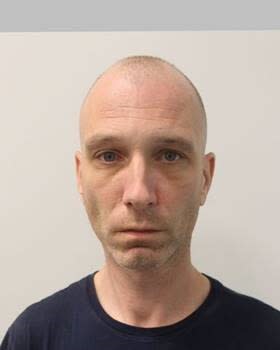
An investigation by the Met’s Counter Terrorism Command has led to the conviction of a man who was gathering together fireworks and other components to make an improvised incendiary device he was planning to use to target a mosque in south London.

Steven Bishop, 41 (28.11.77) of south London pleaded guilty at Kingston Crown Court on 8 April to possession of an explosive substance with intent, contrary to section 3 of the Explosive Substances Act 1883.

He previously pleaded guilty to collection or making a record of information of a kind likely to be useful to a person committing or preparing an act of terrorism, contrary to section 58 of the Terrorism Act (TACT) 2000. He is due to be sentenced on 10 April.

Bishop was arrested by Counter Terrorism detectives on Monday, 29 October 2018, at his address in south London. Officers attended the address after police were contacted by one of Bishop’s key workers when he showed her images of items he was collecting for the purpose, he said, to build ‘a bomb’, and told her that he was intending to target a mosque.

Commander Clarke Jarrett head of the Met’s Counter Terrorism Command said: “From our investigation it was clear Bishop stockpiled a quantity of fireworks and other component parts with the intention of creating a device that he was intending to use to target a mosque. Thanks to the diligence of his key worker in alerting us we were able to intervene before he could progress with his plans any further and crucially, nobody came to any harm.

“This example shows that information we get from the public really can help to protect the public and save lives. If you have any information about suspicious or terrorist activity, then please ACT and call police on 0800 728 321.

“Given Bishop was focussed upon a mosque, and in light of recent events in New Zealand, we also know that Muslim and other faith communities may be feeling particularly concerned and vulnerable. Specialist officers continue to provide support and protective security advice to mosques, and indeed all places of worship across the UK on how to best keep their buildings and visitors safe.”

After the concerns over Bishop were raised to police, officers initially attended his address and Bishop claimed he was just planning to let fireworks off at his mother’s address in south-west London. However, further enquiries were carried out and on 29 October 2018 Bishop was arrested at his mother’s home address. When detectives searched his address, they found several fireworks – some of which had been tampered with, as well as other equipment associated with making homemade incendiary devices, including fuses and remote control and ignitor. A firing device was also delivered to Bishop’s address two days after his arrest.

Officers identified that Bishop had bought a smartphone on 18 October 2018. The first searches made on the phone were for instructions on how to access the ‘dark web’ and he carried out research on how to conduct covert internet searches.

Further analysis of his device showed Bishop visited sites and viewed videos about the Manchester, London Bridge and Paris terrorist attacks. Detectives found a comment Bishop had posted on 24 October 2018 in relation to a video on Facebook about the victims of the Manchester Arena attack which ended with him saying: “don’t worry something bad is going to happen soon mark my words”.

Two ‘VPN’ apps were downloaded on to the phone – the apps are designed to hide which internet sites and online information the user has been accessing. However, when they opened one of the apps, officers found a page was still open, which showed Bishop had been researching further details on explosives detonators. Bishop had also carried out a number of online searches for Morden mosque.

Police searched Bishop’s mother’s address where they found wrapping that matched the fireworks at his home address. In the garden shed, detectives found a red suitcase inside which they found component parts which could be combined to create an improvised incendiary device.

Furthermore, detectives also found a number of hand-written notes by Bishop with detailed information on how to make various explosive substances, as well as information on how to access the dark web. The notes were deemed to be of use to a person committing or preparing an act of terrorism.

After questioning and whilst further enquiries were being carried out, Bishop was charged a week after his arrest on 5 November 2018 and subsequently pleaded guilty to the offences above.

Following the guilty plea, Bishop was remanded in custody and is due to be sentenced on Wednesday, 10 April at Kingston Crown Court.

Met Police

Steven Bishop changed his plea as his trial had been due to start

Steven Bishop changed his plea as his trial had been due to start


A man has admitted planning a bomb attack on a south London mosque.

Steven Bishop, 41, admitted buying fireworks and possessing instructions on how to make an explosive.

Bishop, of Thornton Heath, was believed to have been targeting Morden Mosque when his home was raided by police on 29 October last year.

He will be sentenced on Wednesday after changing his plea on the opening day of his trial at Kingston Crown Court.

He had originally been charged with preparing an act of terrorism, but prosecutors accepted a plea to a charge of possession of an explosive substance with intent to endanger life or property on Monday.

Bishop previously pleaded guilty to possession of information likely to be useful to a person preparing an act of terrorism, specifically a handwritten note on how to make explosives.

When he was arrested he told the police he wanted revenge for the death of eight-year-old Saffie Roussos who died in the Manchester Arena bombing in 2017.

The court heard Bishop has a history of mental health problems and a number of psychiatric reports had been prepared ahead of his trial.

He was remanded in custody until Wednesday,

BBC News

A man has been sentenced after being found guilty of two counts of racially-aggravated criminal damage at a Hyson Green mosque.

Graham Marshall, 70, of Birkin Avenue, Hyson Green, initially pleaded not guilty in connection with two incidents at the Jamia Islamia Mosque in Hubert Street.

However, following a trial, the magistrates found him guilty of both counts.

Marshall, who was caught on CCTV spitting on the front door of the mosque on 16 and 22 December 2018, was given a one-year community order and was fined £200 when he appeared at Nottingham Magistrates’ Court today (Tuesday 2 April 2019).

Speaking after his sentencing Inspector Riz Khan said: “Marshall showed a complete disregard for the faith and belief of others in these highly offensive incidents.

“Hate crime is unacceptable in any degree or form. The force takes any incidents of this nature incredibly seriously and they will not be tolerated.

“We will always thoroughly investigate reports and do everything we can to bring offenders to justice.

“We would always urge anyone who has been the victim of or a witness to hate crime to report it to us by calling 101.”

West Bridgford Wire

A man who deliberately drove at worshippers leaving an Islamic community centre has been jailed.

Three people were hurt when Martin Stokes drove into crowds leaving the Al-majlis Al-Hussaini centre in Cricklewood, north London on 19 September 2018.

Stokes, of Wembley, admitted dangerous driving, causing serious injury by dangerous driving and harassment.

At Harrow Crown Court on Wednesday he was jailed for five years.

Police said 25-year-old Stokes and others had parked outside the community centre on Horseshoe Close after a night of drinking.

The group were asked to move on by event stewards, who said they were causing a disturbance as there was a private event taking place.

Martin Stokes, 25, has been jailed for five years ( Metropolitan Police )

Martin Stokes, 25, has been jailed for five years ( Metropolitan Police )

In response, Stokes shouted racist abuse and then deliberately drove at worshippers leaving the community centre, before fleeing the scene, according to Scotland Yard.

Three people were injured, including a 50-year-old man who was hospitalised for three weeks due to serious hip and leg injuries.

Mohammed Al Bayati, from the Al Hussaini Association, said: “Our members were subject to racist and anti-Islamic taunts followed by a violent attack.

“The attack, against men, women and children and which resulted in serious injuries to the victims, took place at night during Muharram, a sacred month of the Islamic calendar.”

After sentencing, Det Sgt Kelly Schonhage said: “Stokes selfishly drove his car at a group of innocent pedestrians and had no regard whatsoever for their safety.

“It is very fortunate that no lives were lost in this incident and we are pleased that Stokes has now been brought to justice.”

Stokes was also banned from driving for seven-and-a-half years.

Michael O’Donnell, 20, and Thomas McDonagh, 20, both from Wembley, were charged in connection with the incident but their cases were discontinued.

BBC News

Martin Stokes hurled ‘racist and anti-Islamic taunts’ in religiously aggravated attack

Martin Stokes, 25, has been jailed for five years ( Metropolitan Police )

Martin Stokes, 25, has been jailed for five years ( Metropolitan Police )

A man who deliberately drove a car into a group of pedestrians outside a Muslim community centre has been jailed for five years.

Martin Stokes, 25, injured three people when he hurled “racist and anti-Islamic taunts” while he veered into the group outside the Hussaini Association hall in Cricklewood, northwest London, last September.

One man, in his 50s, sustained a serious leg and hip injury that kept him in hospital for nearly a month, the Metropolitan Police said.

Harrow Crown Court was told how at about 12.30am on 19 September Stokes and others were smoking and drinking inside a car parked in a lot close to the community centre.

Stewards for a private event being held there asked them to move on.

But in response “Stokes shouted racist abuse and then deliberately drove his car into a group of people who were leaving the community centre” before speeding away, the Met said.

He was arrested on 23 October following an investigation by Brent police.

On Wednesday he was jailed for five years and banned from driving for seven and a half years.

Stokes, of Lynton Close in Wembley, had admitted dangerous driving, causing serious injury by dangerous driving and a religiously aggravated offence.

Mohammed Al Bayati, from the Al Hussaini Association, said: “Our members were subject to racist and anti-Islamic taunts followed by a violent attack in which a vehicle was deliberately driven onto the pavement and aimed at the crowd of worshippers leaving the mosque.

“The attack, against men, women and children and which resulted in serious injuries to the victims, took place at night during Muharram, a sacred month of the Islamic calendar.”

The Independent

Kevin Crehan arrived just as a corrupt prison officer was busted

Kevin Crehan died at HMP Bristol in Horfield

Kevin Crehan died at HMP Bristol in Horfield

HMP Bristol was awash with illegal drugs and phones when an inmate who died of an overdose was first transferred there – because a corrupt prison officer had been smuggling them in, an inquest has heard.

The scale of the drugs problem at the Horfield prison was laid bare at the inquest into the death of Kevin Crehan – by the very person in charge of security at the jail.

Crehan, 35, died in late December 2016, just weeks after being transferred to the Horfield jail.

The first day of a two-week inquest into his death heard he died of a drugs overdose thanks to a cocktail of five prescription drugs, particularly methadone and diazepam.

An inquest jury heard he had been ‘doing well’ in his efforts to get off drugs during the first months of his sentence, served at Guy’s Marsh Prison in Dorset.

The inquest was told he was transferred to Bristol Prison on the last day of November 2016.

Giving evidence to his inquest was Joanne Hadden, the head of security at HMP Bristol, and she was cross-examined by Mikhael Puar, representing the Crehan family.

He asked her exactly how illegal or illicit drugs found their way into the prison.

She described numerous various ways in which drugs enter the cells, and said that at the end of November 2016, just days before Crehan arrived, a prison officer had been discovered smuggling around £20,000 worth of drugs and phones into the prison to sell to inmates.

That prison officer was subsequently sent to prison themselves, for two and a half years.

It meant that, at around the time Crehan arrived, prisoners had little trouble getting their hands on illegal drugs.

Ms Hadden said that this corrupt route had meant an end to the long-standing practice of friends and family throwing illegal drugs over the walls of the prison, a strategy that had returned in the months after that corrupt officer’s supply route was busted.

But she said that there had been other suspicious officers or staff at the prison. She spoke of other people whose work brings them into the prison, about whom there had been intelligence or suspicion.

“There have been members of staff who don’t work within the prison staff themselves who, while they haven’t been arrested, have left or stopped working there and there’s intelligence that there’s a route that has ended,” she explained.

Mr Puar asked if there was a particular problem at Bristol Prison of staff ‘turning a blind eye’ to prisoners accessing or taking drugs.

“You would like to think not but I’m not naive,” said Ms Hadden. “It’s not large scale though.”

It wasn’t just corrupt staff or civilians who brought drugs in.

“Prisoners can be paid thousands of pounds to return very quickly when they are released on licence, so that they can keep the drugs coming in on the inside,” she said.

“They will be released on licence but then make sure they do something which will mean they are arrested and returned to prison, but will have drugs hidden on them.

“Other routes into the prison are from people throwing them over the wall. In those packages will will be phones and drugs,” she added.

Ms Hadden said that visitors to the prison will bring drugs and phones in, and they have increasingly found that drugs like spice will be secreted within paper sent as letters.

“We found this was happening so acted to stop it. Now instead they will send drugs in legal letters to prisoners, which we are not allowed to open, so we have to check with the individual solicitors’ office to check they actually did send this letter or not

“We’ll close down a route and a new route will open up. It’s a continuing problem we have to face.”

The problem of the tide of drugs entering HMP Horfield has been well-documented before, but has been put into the spotlight with the inquest into the death of Kevin Crehan, which began on Monday.

Toxicology tests revealed Crehan had five prescription drugs in his system: Methadone, diazepam, mirtazapin, gavepentin and pregabalin.

Only one of those – methadone – he was actually prescribed, and even then, both the toxicologist and the Home Office pathologist told the inquest it was likely, on the balance of probabilities, the amount of methadone in his system indicated he’d taken extra on top of the 60mg a day he had been prescribed.

The inquest continues.
Bristol Post

A RACE-HATE thug has been ordered to address his drinking after a boozed-up attack on a policeman.

Handcuffed and languishing in the back of a police car, Paul Grainger used both feet to kick the officer in a violent outburst.

The drunken attack came just months after the 42-year-old was released from jail following a spate of race-hate crimes.

He was once caught on camera trying to kick in the door of a mosque in Newcastle’s West End as he brandished a Union flag and St George’s Cross.

With his pet bulldog in tow, he hurled abuse at the 400 Muslims inside, who were praying on the holiest night of the Islamic calendar.

Another time he was seen to follow a black man, telling him: “Go back to your own country. Newcastle is for whites,” before spitting at his victim.

Months later, on Blackett Street, Newcastle, he abused several African men leading to a four-month jail sentence in January last year.

Now the thug has turned his anger on the authorities.

Newcastle magistrates heard how officers were called to Summerhill House hostel on Westmorland Road, Elswick, Newcastle, where Grainger was found drunk and out of control late on March 29.

David Thompson, prosecuting, told how when police attempted to restrain him, he became “verbally abusive” before his behaviour descended into violence.

“He was arrested and placed in the rear of a police vehicle,” Mr Thompson said.

“The PC then sat in the driver’s seat and said that the defendant became violent. Using both feet, he kicked out at the officer, striking the officer in the left shoulder close to his head.”

Grainger, who resides at Summerhill House, has now been ordered to undergo treatment for alcoholism.

He was also told to pay £50 compensation to the injured officer and given a 12-month community order after pleading guilty to charges of assaulting a police officer and being drunk and disorderly.

Lewis Pearson, defending, said:

“He’s been consuming alcohol from a very young age, since the age of 14. He’s clearly alcohol dependant. He describes it as ‘binge drinking’.”

Chronicle

From 2010


A Missouri man who pleaded guilty to making threatening phone calls to a Georgia mosque has been sentenced to two years in prison.

In a statement Tuesday, federal prosecutors said 50-year-old Preston Q. Howard, of Wright City, made numerous calls last year to the Islamic Society of Augusta in which he threatened to kill members of the mosque and “blow up” the mosque.

Howard acknowledged committing the acts and obstructing or attempting to obstruct the mosque members’ free exercise of their religious beliefs, the news release said.

“Threats made against houses of worship are abhorrent and this Office will work tirelessly to ensure that members of all faiths may worship in peace and without intimidation,” said U.S. Attorney Bobby L. Christine.

Prosecutors said Howard’s sentence was enhanced because Howard chose his victims based on their religion and “thereby committing a hate crime.”

When imposing the sentence, U.S. District Chief Judge J. Randal Hall noted Howard’s “disturbing pattern of intolerance of many groups of people.”

The Augusta Chronicle reports Hall told Howard that his actions were “terribly offensive.”

“Whatever faith you chose — that goes to the heart of who we are as a nation,” Hall said during Tuesday’s sentencing hearing.

Howard told the judge and members of the mosque who attended the hearing that he was embarrassed and ashamed.

“For each one of you, I apologize,” Howard said.

During the seven and a half months he has been held without bond, Howard began to study Islam, he said, adding he understands that terrorists do not represent all Muslims.

Hall pressed Howard, however. What he saw in the pre-sentencing report, he said, was a man of intolerance. “When you’re released from prison, who’s next?” Hall asked.

Howard responded, “I am definitely not the same person.”

Defense attorney Hank Crane had asked Hall to take into account the change in Howard’s attitude. Howard had no criminal history and stopped calling the mosque once confronted by FBI agents in August 2017, Crane said.

Assistant U.S. Attorney Nancy Greenwood asked Hall to consider not only the vile messages left over a three-month period, but also other indications of Howard’s intolerance — such as Confederate battle flag stickers covering his mailbox and the sticker of the president with a Hitler-style mustache overlaying a swastika, and similar messages and symbols on his three Facebook pages.

Hall granted the federal prosecutor’s request to go above the federal sentencing guideline range of 15 to 21 months. He also ordered Howard to immediately reimburse the mosque members for nearly $30,000 spent to increase security.

Speaking on the mosque’s behalf, Dr. Hossam Fadel told the judge that the members refused to let fear take them away from their faith.

Founded in 1976, the mosque has grown into a community that provides food, clothing and medical care to those in need, opened a full-time school and opened its doors to everyone in the community.

“We are part and parcel of the … community,” Fadel said.

Charlotte Observer