Archive

Tag Archives: violent disorder

Two yobs who were at the forefront of the shocking violent disorder in Hartlepool have been jailed for more than five years.

Ben Judge and Aaron Bradshaw, both 28, were “persistent participants” in scenes of mob violence and attacks on police in Murray Street on the evening of Wednesday, July 31.

Both were filmed hurling missiles at riot officers on police body worn cameras, social media footage and drone images.

Rachel Masters, prosecuting at Teesside Crown Court, described how Judge, who covered his face, threw bricks several time at police and approached officers aggressively with a brick in each hand.

He was also part of a group that surged at the police line.

Judge, who at the time was on a suspended sentence for possession of a blade, was arrested around a week later after a police appeal.

Bradshaw, who lives on Murray Street, also “got as close as possible” to the police and was captured on footage bare chested and wearing a black Balaclava-like mask.

He also threw objects at police and at one point was armed with a cosh.

Ms Masters said: “The defendant continues kicking out at officers and throwing items at them.”

He continued even after being hit on the leg with a police baton and only retreated after receiving a broken arm.

Both men have numerous previous convictions and pleaded guilty to violent disorder at an earlier hearing in the magistrates’ court.

The court heard how the disorder followed a so-called protest advertised on social media which grew to around 200 people and had started to turn violent by 7.30pm.

Stephen Constantine, mitigating, for Judge, of Farr Walk, Hartlepool, had been out with a friend that night when he came across the disorder and became involved on “impulse”.

He said Judge was “embarrassed and ashamed” and apologised for his actions but was “realistic” about the outcome.

Gary Wood, for Bradshaw, added: “The defendant accepts that his conduct on the footage was shameful.”

Judge was jailed for three years and Bradshaw for two years and eight months.

Judge Francis Laird told them: “This was a widespread incident involving large scale acts of violence towards both people and property.

“The level of aggression towards the police was shocking.”

So far seven people have been jailed for their part in the disorder.

Hartlepool Mail

A father-of-one who poured a can of cider over a police officer during a protest in Weymouth has been jailed for 21 months.

Kevin Searle, 40, of Weymouth, pleaded guilty to violent disorder and assault by beating of an emergency worker during the demonstration on 4 August.

The court heard Searle had been fishing during the day, drank six cans of cider and while walking home he “heard the noises of the protest” and “decided to join in”.

Searle has previously appeared in court 32 times for 52 offences, magistrates were told.

Defence solicitor Richard Martin said Searle “cried” when he saw footage of himself at the protest.

Judge William Mousley KC said there was “no lawful reason” for Searle’s behaviour.

He said: “You were at the front of the group for much of the time, one of those leading the disorder, gesturing in an aggressive manner, you pushed and shoved at police and you threw a can of drink towards them.”

BBC News

More than 1,100 people now arrested over far-right violence, with almost 650 charged, say police chiefs

A 15-year-old boy has become the first person to be charged with riot following recent disorder in several cities.

Prosecutors said the teenager, who cannot be named for legal reasons, would appear at South Tyneside Youth Court.

Rioting carries a maximum penalty of 10 years in prison – double that of violent disorder.

He joins a 20-year-old involved in the Southport riot, as well as one of the thugs who attacked a Black man in Manchester, who are also facing jail.

Tom Neblett, 20, from Southport, was jailed for 30 months on Thursday after scaling a van and throwing bricks and other projectiles at police.

Meanwhile, Joseph Ley from Stockport, was among a large group of white males who attacked a Black man in Manchester city centre on 3 August.

The 30-year-old is being sentenced for violent disorder at Manchester Crown Court, along with two other rioters.

On Thursday, the National Police Chiefs’ Council (NPCC) said 1,127 people had been arrested so far, with 648 charged, following the days of violence across England and Northern Ireland.

20-year-old who climbed onto van and threw brick at police jailed for 30 months

A 20-year-old who climbed on to a van and repeatedly launched projectiles at police officers in Southport has been locked up for 30 months.

Tom Neblett, aged 20, attended a vigil for the previous day’s stabbing at a dance class in which three girls were killed, but he later joined a 1,000-strong group who “without any evidence or justification” attacked a nearby mosque and then police officers who gathered in response, Liverpool Crown Court heard.

Neblett threw a brick at the passenger side window of a police carrier while the driver was still inside before colleagues in riot gear removed him as he shielded his head with his hands.

He was also seen on CCTV footage at the “very forefront” of the missile throwing as he picked up a smoke flare and hurled it towards the line of officers. He later scaled a white van and repeatedly threw more bricks and pieces of paving slabs at the police carrier and officers, the court heard.

Judge Dennis Watson KC told Neblett that a pre-sentence report had shown “a different side to you, the yob who was throwing missiles repeatedly” but he added: “The effect of your actions will have been to encourage others to have been involved and do likewise. Those actions cannot be viewed in isolation and should not be underestimated.”

The Independent

As the courts dispatch swift justice to those involved in the race riots earlier this month, Zoë Beaty observes the grim scenes being played out in decaying towns where few believe this could never happen again

Within 10 minutes it’s over. Another fate is sealed. The process is simple and already repetitive: the defendant, this time wiry apprentice electrician Declan Dixon, 22, wearing prison-issue grey tracksuit bottoms, is brought up from the cells to court number 7.

As the charges are read – violence disorder, possession of cocaine – he bows his head. A weary defence lawyer makes a case for bail – Dixon, who pleaded guilty to all offences, would like, he says, to visit his mum in Wigan, to say goodbye.

Dixon cuts a pitiful figure standing in the dock, which is covered with a thick layer of dust. He nods earnestly in the direction of the judge as the appeal is made. He accepts he’s going to jail, his lawyer explains to the court, “because he’s been seen on TV” taking part in the Hartlepool riots on 31 July. But, just like the scores of others shuffling through the court this week pleading for a break, he finds that the judge is unwilling to pander.

Dixon leaves the courtroom and is escorted back to the cells to await sentencing. Others are receiving 20 months for similar offences committed during the riots that spread across the country earlier this month. The chances of him sitting in his mum’s kitchen any time soon are slim.

The backdrop to this sorry scene is Teesside Magistrates’ Court, an antiquated building close to a downtrodden city centre. The riots that erupted across the country on 29 July might have been quashed for now, but here the process of delivering justice has only just begun. More than 50 people have been hauled before a judge here in the past week; on 6 August, 27 were dealt with in one day.

It’s a snapshot of a grim wider picture. The police have now arrested more than 1,000 people involved in the racially motivated violence that began at the end of last month. On Tuesday, the National Police Chiefs’ Council (NPCC) confirmed that 575 people had been charged, and warned that there were “hundreds” more to come in a crackdown that is likely to last for weeks to come.

The violence being documented in the courts has in some cases been unprecedented and grotesque. In Rotherham this week, a 60-year-old man was sentenced to two years and eight months for his part in the terrifying violence that took place outside a hotel used to house asylum seekers.

Over in Chester, a 53-year-old woman who lived a “quiet, sheltered life” was jailed for 15 months after she admitted posting a threatening Facebook message that stated: “Don’t protect the mosques, blow the mosque up with the adults in it.”

Middlesbrough has also seen cases that have become synonymous with the heinous disorder that began in the days that followed the stabbing of three young girls at a dance studio in Southport.
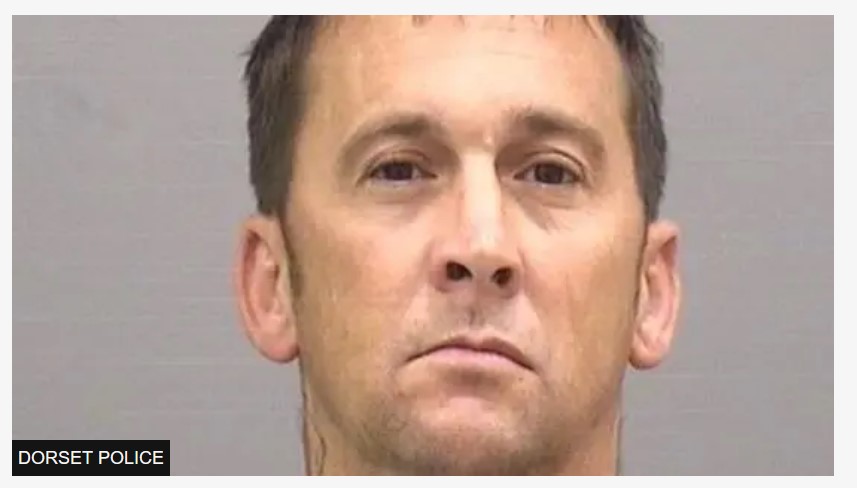
Last week, Stacey Vint was sentenced to 20 months in prison for pushing a burning wheelie bin into a row of police officers. On Monday, Thomas Rogers appeared here, too. He was described as “the idiot with a hoover” by the landlord of a house the 22-year-old smashed up with a vacuum cleaner.

The court heard that he threw bricks at police officers and told them that he hoped their children would be raped as he was taken into custody after the riots on 4 August. His young defence lawyer, Tabitha Buck, told the court that Rogers was “overwhelmed” by the stabbings in Southport, “and by what he says is a lack of reaction from the police”.

The cases keep on coming – in the courtroom, horrific Islamaphobic slurs are read out in monotone as cases are set out, and lawyers wrangle over video replays of defendants shouting “We want our country back.” Those sat in the dock hear their words read back to them. Adrenaline-fuelled bravado now drained, some defendants look mildly ashamed, at least while in front of a judge. The majority I see plead guilty, meekly accepting their involvement and the punishment to come.

In the public gallery, however, it’s sometimes not so quiet. Members of one family, who have come to get a glimpse of their 18-year-old grandson emerging from custody, are visibly upset. “This doesn’t happen to families like ours,” they say as the five-minute hearing ends. “We’re a good family.”

There are small gatherings of people waiting outside on the court steps, too, and a few low-key disturbances have happened inside the court. “There was a report of one guy shouting from the public gallery,” says Paul Doney of the CPS. “He’s now been charged for his own involvement in the riots.”

It’s mostly the same sort of people sitting in the public gallery, I’m told; people wearing tracksuits and flip-flops to court – those who “know their way around already”, says Alex Storey, a reporter for the local North News and Pictures. He was on the front line of the riots across the North East, which hit Hartlepool, Sunderland and Middlesbrough in quick succession. Since then he’s been talking to victims, and sitting on countless press benches in courts across the region.

It’s been 12 years since I too was a local news reporter on this beat, but Teesside Magistrates’ Court is exactly as I remember it. The late-1980s turquoise flooring; polystyrene squares that cover the ceiling between strip lighting; the squarks of seagulls outside comically echoing in clinical corridors. In the courtrooms, magistrates sit at worn desks. Opposite the plastic blue seats in the public gallery, graffiti is etched into the wooden balcony railings.

The time warp extends to the town itself. I notice only small changes, and none for the better. The public library opposite the courts now has boarded-up windows. Shops that once dominated the high street, such as Debenhams and House of Fraser, are today dormant and decaying, and there are empty and half-empty baggies of drugs scattered on the paths.

The fountain outside the Crown Court, in the regenerated university area, has been shut off due to a rat problem, I’m told. “There’s no ‘levelling up’ here, no matter what they tell you,” a court usher says as we chat in the foyer. “That’s the problem.”

The area has a long, deeply entrenched history of neglect. The once thriving steelworks felt the sharp end of Margaret Thatcher’s policy of privatisation in the late 1980s, as a 170-year-old industry that, despite several sales and attempts to save it, has since seen nothing but decline.

The final closure, in 2015, led to a 13 per cent rise in unemployment – mainly among predominantly white, working-class men over the age of 50. Out of work, many were consigned to the benefits system. Multigenerational unemployment, along with a mood of resentment and frustration, was left to fester by governments of both colours. Earlier this year, a report by the Joseph Rowntree Foundation showed that Middlesbrough had the highest rate of child poverty in the North East – almost half.

The other cases in court this week add to the picture of a town trapped in a downward spiral, where opportunities are few and people to blame are many. One case includes a woman facing a charge for a £13.15 theft from Morrisons “because she was hungry”, a defence lawyer tells the court. Theft related to drug use is a common theme.

I sit with Leanne, from Hartlepool, as she waits nervously for her partner, who has been on remand for eight weeks for common assault. She says his crime was related to complex mental illness – yet he’s been waiting for two years for therapy.

“Things are hard,” she says, quickly adding that neither her partner nor any of her family had anything to do with the riots. “It’s scary,” she continues. “I’m scared to let my kids out. I don’t want them to grow up like this. I’m scared for myself, even.”

Take a 10-minute walk from the courts, and it’s clear why. Garnet Road – an area just off the city centre, where there’s a large Asian community – was “decimated” during the riots, Storey says. “Cars have been smashed, front windows have been smashed.” Vehicles were also set alight, and curtains ripped from front rooms to be used as tinder.

“We thought the court was a goner,” one usher tells me. “They came right past. All the university buildings [five minutes’ walk away] were smashed up, too.”

The court survived, but it’s now being put through its paces by prime minister Keir Starmer’s rapid sentencing plan. In full swing in Teesside and across many other deprived northern towns, it seems to be working, albeit aided by a significant amount of elbow grease from exhausted court employees. Many rioters are being sentenced within four days of their plea hearing, a process that Doney tells me would usually take around four weeks.

“Starmer wanted the courts open 24 hours – well he nearly had that last night,” a security guard at the magistrates’ court tells me. He finished work at 11.55pm the night before; the van drivers, ferrying prisoners between cells, “didn’t get off until 3am”, he says. “There’s nowhere to take the prisoners. Everywhere is full.”

So far, UK courts such as this one have sent a robust message – that racism and violent disorder won’t be tolerated. For now, the rioters are off the streets, many beginning fair, hefty sentences in overcrowded prisons or languishing in full-to-the-brim police custody. But these short hearings can’t give answers to why the story is unlikely to end there.

“They’re all looking for someone to blame,” a man in his mid-fifties, who doesn’t want to be named, tells me outside the court. “It was inevitable. People are p***** off – for the wrong reasons, or with the wrong people, like, but they’re p***** off. They don’t trust the government or the media. They think it’s all someone else’s fault.”

You can remove the thugs from the street, he’s essentially saying, but the conditions remain for misguided anger to froth over into violence once more.

Today, locals in the surrounding streets are busy trying to fix things up and erase some of the damage caused to their community. The lists for court hearings are still growing in Middlesbrough, as they are in neighbouring Newton Aycliffe, and further north in South Tyneside, Sunderland and Newcastle.

“They’ll keep coming,” Doney says. And the pressure on the court officials, prison staff and police will keep building. But, however busy the justice system will be for the foreseeable future, the real work for those taking stock hundreds of miles away in Westminster is just beginning.

The Independent
A 15-year-old boy and two women have pleaded guilty to violent disorder following unrest in Bristol city centre.

They were among protesters who clashed with police on 3 August. The boy appeared at Bristol Youth Court on Thursday and will be sentenced on 3 September by District Judge Lynne Matthews. He was not remanded in custody.

Elly-Jayne Cox, 33, of Bishopsworth, Bristol, and Lisa Bishop, 38, of Lawrence Weston, Bristol, appeared before Bristol Magistrates’ Court earlier.

Both women pleaded guilty to a charge of violent disorder and were remanded into custody by District Judge Joanna Dickens.

Prosecutor Paul Ricketts told the court video footage showed Cox shouting at officers and being “racist in tone”.

“There’s video footage where the defendant can be seen shouting at officers, many of those racist in tone, the defendant can be seen on footage at the front of the group shouting at officers,” Mr Ricketts said.

“When it moved to Redcliffe Way the defendant can be seen shouting at officers.

“She can be seen with a can which it looks like she throws at the opposing group.”

When asked if she pleaded guilty or not guilty Cox replied “Yeah I’m guilty”.

She and Bishop will appear before Bristol Crown Court on Friday to be sentenced.

Bradley McCarthy, 34, of Knowle, was charged with violent disorder overnight and is due in magistrates on Thursday.

Officers have so far arrested 28 people and charged 15 in connection with the unrest on 3 August.

Avon and Somerset Police said its investigation into the disorder was continuing it has released images of people officers wanted to identify.

BBC News

A man who threw stones and rocks at police during a violent protest in Middlesbrough has been jailed.

More than 1,000 people were estimated to have taken to the streets in the town on 4 August, days after similar violence erupted in Hartlepool, Teesside Crown Court heard.

Eight officers were injured in Middlesbrough and houses and cars were damaged, prosecutors said.

Jonathan Ambrose, 33, admitted violent disorder and was jailed for two and a half years. Five more men are due to be sentenced later.

Prosecutor Rachel Masters said a “peaceful protest” in Middlesbrough was advertised on social media, with crowds gathering at the Cenotaph in Linthorpe Road at about 13:45 BST.

She said a march set off towards the town centre and was initially peaceful, but as the marchers passed Clarendon Road an object was thrown at them and the atmosphere become “heated”, Ms Masters said.

Police quickly formed a line to stop protestors getting into Clarendon Road which “numerous people attempted to break through”, the court heard.

“From that point onwards it became violent,” Ms Masters said, adding missiles were thrown at officers, bins set on fire and cars and windows smashed.

Drug-addict Ambrose, of Letitia House drug treatment centre in Middlesbrough, was seen at about 19:00 near Parliament Road throwing rocks and stones at police officers, Ms Masters said.

In mitigation, his lawyer Tabitha Buck said he had gone to see what was happening and made the “stupid mistake” of getting involved which he now regretted.

Ambrose, who had multiple previous convictions including for causing racially aggravated harm or distress, was jailed for 30 months having also admitted possessing cannabis.

BBC News

Paul Smith, 21, could be seen throwing bricks and a bottle towards police officers and vehicles in footage shown to the court.

A man “inspired by the ignorance of racism” who threw bricks at police outside a hotel housing asylum seekers has been jailed for two years and 10 months.

Paul Smith, 21, of Keynsham Road, Manchester, was sentenced for violent disorder on Thursday morning at Manchester Crown Court.

In footage shown in court, Smith could be seen throwing bricks and a bottle towards police officers and vehicles during the disorder outside the Holiday Inn hotel in Manchester on July 31.

Prosecutor Philip Hall said of Smith’s demeanour on the footage: “He’s smiling and appears to be taking some delight from the event.”

Judge John Potter said “mobs gathered in towns and cities throughout the country intent on retribution” after “lies were deliberately spread” about the background of the alleged Southport stabbing attacker.

He added that these mobs were “inspired by the ignorance of racism” and “deliberately attacked” hotels where asylum seekers were living.

Inspired by the ignorance of racism, mobs gathered in towns and cities throughout the country intent on retribution

Judge John Potter

Mr Hall said a “troubling” Facebook post encouraging people to meet outside the hotel on July 31 was reported to police.

The post included the words: “Let’s get them out. 6pm today. Stand up and take note”, and was followed by three fist emojis and three emojis of the England flag.

A police officer at the scene reported that some of the group were “wearing balaclavas” while others were “drinking (from) bottles of alcohol”.

The officer said the gathering was “initially good-natured” but the “mood changed” when several hotel residents arrived.

Mr Hall said: “Glass bottles, eggs and water were thrown towards police and hotel residents as they were escorted into the hotel grounds.”

A hotel resident who was hospitalised after suffering cuts from a bottle that was thrown said the disorder had a “devastating effect” on them.

In a statement read out to court, they added: “I came to this country to feel safe, but since this incident I do not feel safe any more.”

A bus driver was also hospitalised after he was punched during an attack on his vehicle that passed by the hotel.

In a statement read out to court, the driver said: “I don’t go to work to be attacked.

“These men have left me feeling visibly shaken and frightened to go back to work.”

A housing officer at the Holiday Inn hotel said they had “started taking different routes into work” since the disorder, adding that other colleagues were “afraid to come into work”.

Hotels where asylum seekers were living were deliberately attacked. On occasion individuals were randomly assaulted – mainly it seems because of the colour of their skin

Judge John Potter

In his sentencing remarks, Judge Potter said: “On July 29, an appalling and tragic attack took place in Southport. Three children lost their lives and numerous other children and adults were seriously injured in a knife attack.

“Shortly after that attack, lies were deliberately spread via leaflets, the internet and social media as to who may have been responsible.

“This material emphasised the supposed nationality, ethnicity and religion of the alleged attacker.

“Inspired by the ignorance of racism, mobs gathered in towns and cities throughout the country intent on retribution.

“Groups of individuals were targeted for this retribution by these mobs.

“The targeted groups were often those in the UK who may have come to seek sanctuary.”

The judge added: “Hotels where asylum seekers were living were deliberately attacked. On occasion individuals were randomly assaulted – mainly it seems because of the colour of their skin.”

Defending, Laura Broome said Smith had taken “full responsibility for his part in what he accepts was an appalling incident” and had not taken a “leading” role in the disorder.

She cited a witness statement from a neighbour describing Smith as “inclusive, polite and caring”.

Judge Potter said Smith was identified from the footage because he was “wearing distinctive training shoes”.

The judge told Smith: “Your attempt to disguise your identity by wearing a T-shirt on your head was unsuccessful.”

Another man who carried out a “spinning kick” against a shop window during disorder in Manchester city centre on August 3 was jailed for 20 months.

Oliver Chapman, 23, of Duke Street, Radcliffe, was sentenced for violent disorder on Thursday afternoon at Manchester Crown Court.

During a police interview, Chapman admitted kicking a shop front, saying: “I’d done a silly spinning kick to it.”

Evening Standard

Nevey Smith will be sentenced next week as judge blasts her for ‘putting child at risk’

A young mother who brought her child to a riot in a pushchair has pleaded guilty to violent disorder.

Nevey Smith, 21, of West Street, Oldham, admitted throwing water over police outside a hotel housing asylum seekers in Manchester on July 31.

Prosecutor Tess Kenyon told Manchester Magistrates’ Court: “Footage shows her throwing liquid from a bottle towards police officers who were trying to maintain order.

“She had a child with her in a stroller.”

Defending, Robert Moussalli said Smith had “lost her temper” during the disorder and “threw some water”.

District Judge Joanne Hirst told Smith: “You put your own child at risk.”

The judge added Smith was “not as heavily involved as others in the demonstration” and was “not heard to utter any direct racist abuse”.

She was released on bail and will be sentenced at Manchester Crown Court on August 19.

Smith is one of hundreds of people arrested and charged after the disorder which broke out after the murder of three young girls in a knife attack in Southport.

The National Police Chiefs’ Council said in its latest update that 1,024 people had been arrested and 575 charged across the UK in relation to the unrest. According to the Crown Prosecution Service, as of Monday, 273 people have been charged in relation to the disorder.

The NPCC figure is higher to reflect charges which are solely issued by police and do not involve the CPS.

Two 12-year-old boys are believed to have become the youngest people to be convicted of a criminal offence in connection with the nationwide public disorder.

Evening Standard

Two women have pleaded guilty in connection with a far-right riot in Bristol. Avon and Somerset Police said 15 people have now been charged following the violent disorder in the city centre on Saturday, August 3.

Lisa Bishop, aged 38 and of Lawrence Weston, and Elly-Jane Cox, aged 33 and of Bishopsworth, are the latest to be charged with violent disorder. They appeared at Bristol Magistrates’ Court today, Thursday, August 15, pleaded guilty and were remanded into custody by District Judge Joanna Dickens.

They will be sentenced at Bristol Crown Court on Friday, August 16. Bristol police chiefs previously vowed to take “swift action” against people involved in the riot. They are still working to hunt down and arrest offenders, including so-called keyboard warriors who stirred hatred online.

Avon and Somerset Police said: “Our investigation into the disorder continues and we have released images of people we need the public’s help to identify. Anyone who recognises any of those pictured is asked to complete our online form.

“We would like to remind people of the importance of not publishing any commentary or material, including images or footage, that could impact and prejudice live legal proceedings.”

Bradley McCarthy, aged 34 and of Knowle, was also due to appear at Bristol Magistrates’ Court on Thursday, August 15.

Bristol Post


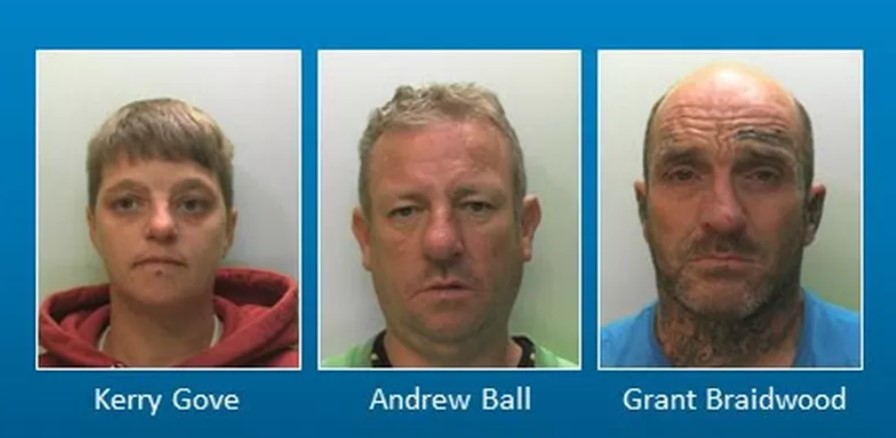
A woman and two men are the latest people to have pleaded guilty to violent disorder following a far-right anti-immigrant protest in Plymouth.

Devon and Cornwall Police said that Kerry Gove, aged 34, of Maker View; Andrew Ball, aged 49, of Lisson Grove, and Grant Braidwood, aged 40 and of Elliott Road, all admitted violent disorder. They are all in prison on remand to await sentencing.

Gove, Ball and Braidwood appeared at Plymouth Magistrates’ Court this morning, Thursday, August 15. All three pleaded guilty to violent disorder in connection to a far-right protest which took place in the city centre on Monday, August 5.

Devon and Cornwall Police released a statement which said: “Three people have pleaded guilty to violent disorder, in connection with events in Plymouth on Monday 5 August.

“They have been remanded in custody and will be sentenced at Plymouth Crown Court tomorrow, Friday 16 August.

“Kerry Gove, aged 34, of Maker View, Plymouth, Andrew Ball, aged 49, of Lisson Grove, Plymouth and Grant Braidwood, aged 40, of Elliott Road, Plymouth.”

The National Police Chief’s Council has said 1,127 people have been charged across the UK following a number of riots since July 29. It said there has been 1,127 arrests and 648 charges in relation to the ongoing disorder.

Plymouth Herald