So easily has the FGC-9 given criminals, terrorists and insurgents access to deadly weapons that even owning the instructions is illegal
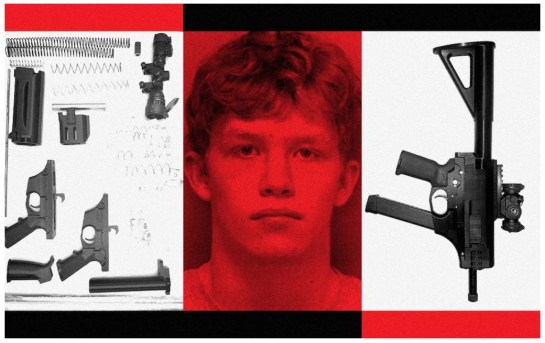
A gun you can make at home sounds like the stuff of science fiction, but a landmark sentencing today is a reminder that it has become a terrifying reality in the UK.
This afternoon (Monday Oct 14), a 20-year-old neo-Nazi who was at an “advanced stage” of building his own semi-automatic rifle and accompanying ammunition was jailed for six-and-a-half years.
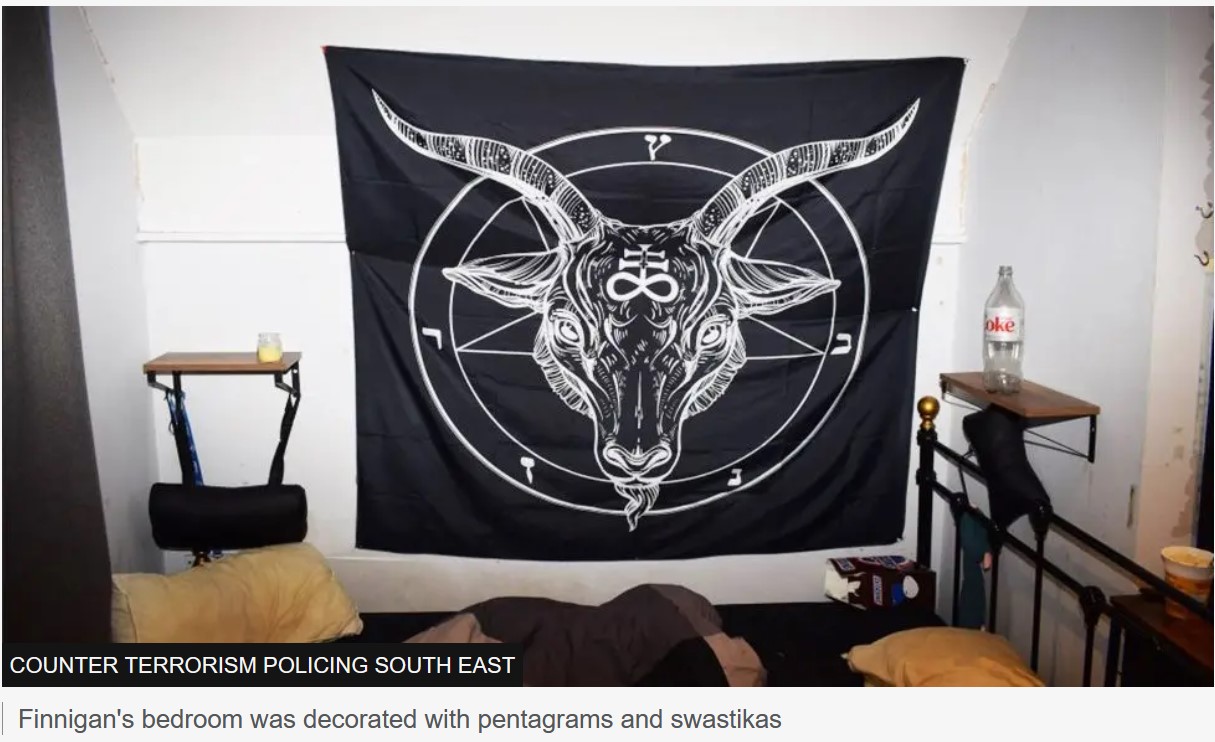
When police arrested Jack Robinson, then 18, in February 2023, they also discovered a stash of military-style clothing, stab vests, balaclavas and German Second World War memorabilia at his home in Portsmouth.
Winchester Crown Court heard that while operating online under usernames including “kill all Jews”, the teenager had downloaded more than 500 documents containing information on explosives, weapons and 3D-printed guns, alongside a large volume of white supremacist propaganda.
Prosecutor Naomi Parsons said Robinson had been working on his rifle for months by the time he was arrested and “it was simply fortuitous that police found the gun before it had been completed and assembled”.
His case has shone a light on the growing problem of 3D-printed firearms, which threaten to enable British criminals to bypass strict gun control laws using online instructions.
And it was his weapon of choice, the FGC-9, which is beginning to pose a particular challenge for law enforcement in the UK and around the world.
Standing for F— Gun Control and the 9mm ammunition it fires, the semi-automatic rifle can be entirely manufactured at home, without commercially manufactured or regulated parts.
Now thought to be the most popular gun of its kind globally, it has sparked particular concern among authorities because of the unprecedented detail contained within its instruction manual and the availability of all necessary materials, which dramatically lowers the bar for construction compared to previous homemade firearms.
With a 3D printer, everyday materials and tools, and some metalworking skills, anyone can now make the high-powered weapon in their living room or garage, like a deadly Airfix model.
As a result, over the four years since the design was first released, the FGC-9 has spread from obscure pro-gun internet forums into the hands of criminals, terrorists and insurgents across five continents.
But its appeal is not just attributed to its practical effectiveness – the FGC-9 is also an ideological project designed by its creator to inspire people around the world to make guns in defiance of “tyrannical” governments.
While it has been especially popular in mainland Europe, the weapon has made steady inroads in Britain, too.
The Robinson case marks one of more than a dozen instances in the past four years in which British criminals and terror offenders have been charged with either trying to build the FGC-9 or possessing its instruction manual.
Several were aspiring to commit mass shootings with the weapon, while others have been seeking to manufacture it as a criminal enterprise to sell onto gangs, or apparently just building it as a hobby. The FGC-9 has become so desirable among the far-Right, in particular, that authorities now prosecute the possession and sharing of its instruction manual as a standalone terror offence.
In Robinson’s case, he pleaded guilty to attempting to manufacture a firearm, possessing prohibited parts and three counts of possessing material useful to a terrorist – including the FGC-9 manual. The court heard how the “isolated” defendant had dropped out of sixth-form college and had few friends.
Sentencing Robinson as his mother loudly sobbed in the court’s public gallery, a judge ruled that he was a dangerous offender, although he claimed he did not intend to use the gun beyond “testing” it.
“I find you were motivated by terrorism,” Mrs Justice McGowan told Robinson, as he stood impassively wearing a crisp blue shirt. “Your interest in firearms has to be viewed in connection with the mindset material found. That material found glorifies the killing of Jews.”
Robinson also admitted four other offences relating to 810 indecent images of children, which police found while examining his computer and hard drive.

The FGC-9 first emerged in March 2020 when the manual was published online by a 3D firearms printing collective called Deterrence Dispensed.
The 110-page document took readers through the process in painstaking detail, from a list of the tools needed to step-by-step diagrams and a suggested manufacturing timeline.
Dr Rajan Basra, a researcher from the International Centre for the Study of Radicalisation who has studied the development of the FGC-9, says it was “groundbreaking”.
Although 3D-printed guns had been around since 2013, previous designs “weren’t reliable”, he explains. “You could maybe only fire a few shots, they could disintegrate. And the 3D-printed guns that were reliable and accurate needed off-the-shelf parts manufactured by gun companies, like the barrel.
“That is very difficult to get hold of outside of the US. So the FGC-9 was groundbreaking because it was the first time that you could have a reliable, semi-automatic, 9mm firearm that could be entirely made at home.”
But practical instruction was not all the guide provided – it was also an international call to arms. The author urged readers to build the FGC-9 as a “means to defend yourself and not be a victim to unjust firearm legislation any longer”, adding: “We together can defeat for good the infringement that is taking place on our natural-born right to bear arms, defend ourselves and rise up against tyranny at any time.”
The words were written by the FGC-9’s creator, who called himself JStark in tribute to General John Stark – a hero of the American Revolution – and adopted his slogan: “live free or die”.
The phrase was automatically etched into the side of the FGC-9 by the files released to make its 3D-printed parts, and JStark and fellow members of Deterrence Dispensed swiftly began publicising the manual across multiple online platforms.
A gun you can make at home sounds like the stuff of science fiction, but a landmark sentencing today is a reminder that it has become a terrifying reality in the UK.
This afternoon (Monday Oct 14), a 20-year-old neo-Nazi who was at an “advanced stage” of building his own semi-automatic rifle and accompanying ammunition was jailed for six-and-a-half years.
When police arrested Jack Robinson, then 18, in February 2023, they also discovered a stash of military-style clothing, stab vests, balaclavas and German Second World War memorabilia at his home in Portsmouth.
Winchester Crown Court heard that while operating online under usernames including “kill all Jews”, the teenager had downloaded more than 500 documents containing information on explosives, weapons and 3D-printed guns, alongside a large volume of white supremacist propaganda.
Prosecutor Naomi Parsons said Robinson had been working on his rifle for months by the time he was arrested and “it was simply fortuitous that police found the gun before it had been completed and assembled”.
His case has shone a light on the growing problem of 3D-printed firearms, which threaten to enable British criminals to bypass strict gun control laws using online instructions.
And it was his weapon of choice, the FGC-9, which is beginning to pose a particular challenge for law enforcement in the UK and around the world.
Standing for F— Gun Control and the 9mm ammunition it fires, the semi-automatic rifle can be entirely manufactured at home, without commercially manufactured or regulated parts.
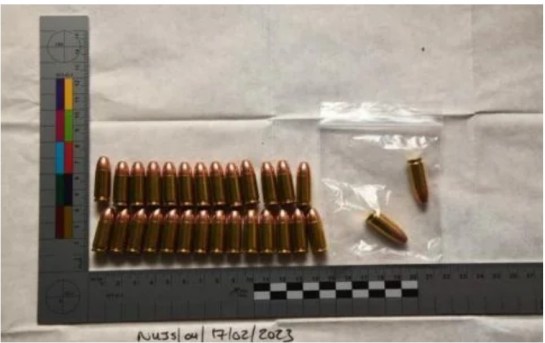
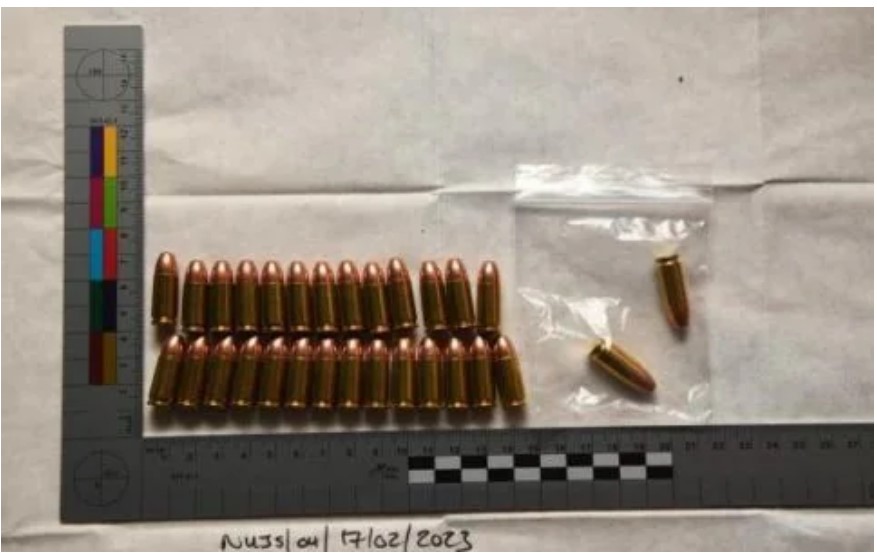
Neo-Nazi Jack Robinson’s stash of 9mm ammunition shown in trial images released by the Counter Terrorism Policing South East (CTPSE)
Jack Robinson’s stash of 9mm ammunition shown in trial images released by the Counter Terrorism Policing South East (CTPSE) Credit: CTPSE
Now thought to be the most popular gun of its kind globally, it has sparked particular concern among authorities because of the unprecedented detail contained within its instruction manual and the availability of all necessary materials, which dramatically lowers the bar for construction compared to previous homemade firearms.
With a 3D printer, everyday materials and tools, and some metalworking skills, anyone can now make the high-powered weapon in their living room or garage, like a deadly Airfix model.
As a result, over the four years since the design was first released, the FGC-9 has spread from obscure pro-gun internet forums into the hands of criminals, terrorists and insurgents across five continents.
But its appeal is not just attributed to its practical effectiveness – the FGC-9 is also an ideological project designed by its creator to inspire people around the world to make guns in defiance of “tyrannical” governments.
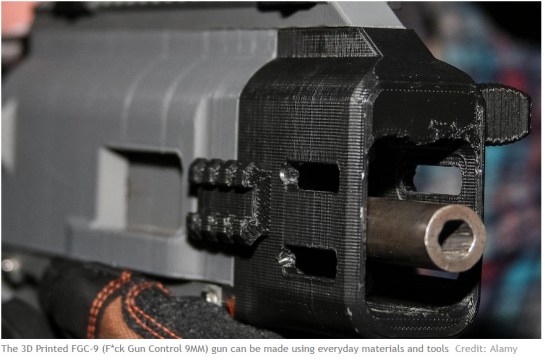
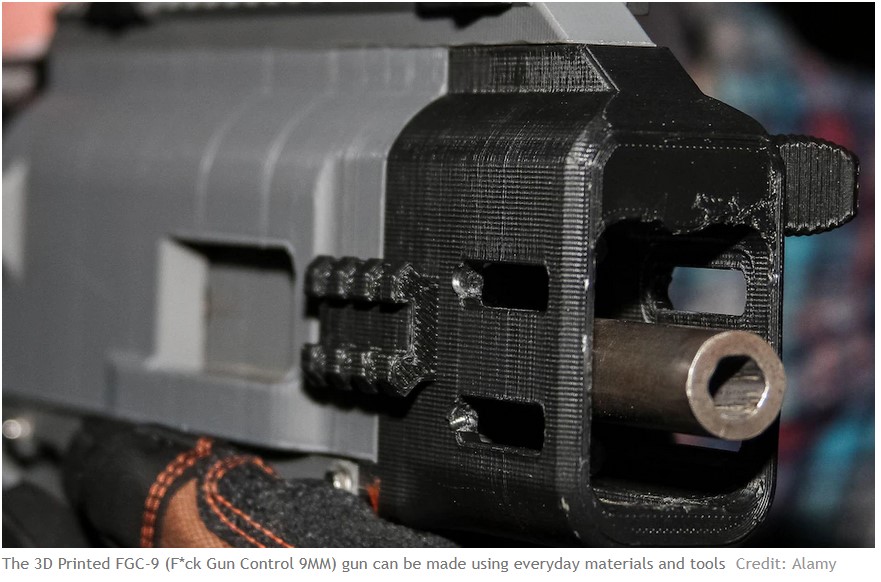
3D Printed FGC-9
The 3D Printed FGC-9 (F*ck Gun Control 9MM) gun can be made using everyday materials and tools Credit: Alamy
While it has been especially popular in mainland Europe, the weapon has made steady inroads in Britain, too.
The Robinson case marks one of more than a dozen instances in the past four years in which British criminals and terror offenders have been charged with either trying to build the FGC-9 or possessing its instruction manual.
Several were aspiring to commit mass shootings with the weapon, while others have been seeking to manufacture it as a criminal enterprise to sell onto gangs, or apparently just building it as a hobby. The FGC-9 has become so desirable among the far-Right, in particular, that authorities now prosecute the possession and sharing of its instruction manual as a standalone terror offence.
In Robinson’s case, he pleaded guilty to attempting to manufacture a firearm, possessing prohibited parts and three counts of possessing material useful to a terrorist – including the FGC-9 manual. The court heard how the “isolated” defendant had dropped out of sixth-form college and had few friends.
Sentencing Robinson as his mother loudly sobbed in the court’s public gallery, a judge ruled that he was a dangerous offender, although he claimed he did not intend to use the gun beyond “testing” it.
“I find you were motivated by terrorism,” Mrs Justice McGowan told Robinson, as he stood impassively wearing a crisp blue shirt. “Your interest in firearms has to be viewed in connection with the mindset material found. That material found glorifies the killing of Jews.”
Robinson also admitted four other offences relating to 810 indecent images of children, which police found while examining his computer and hard drive.
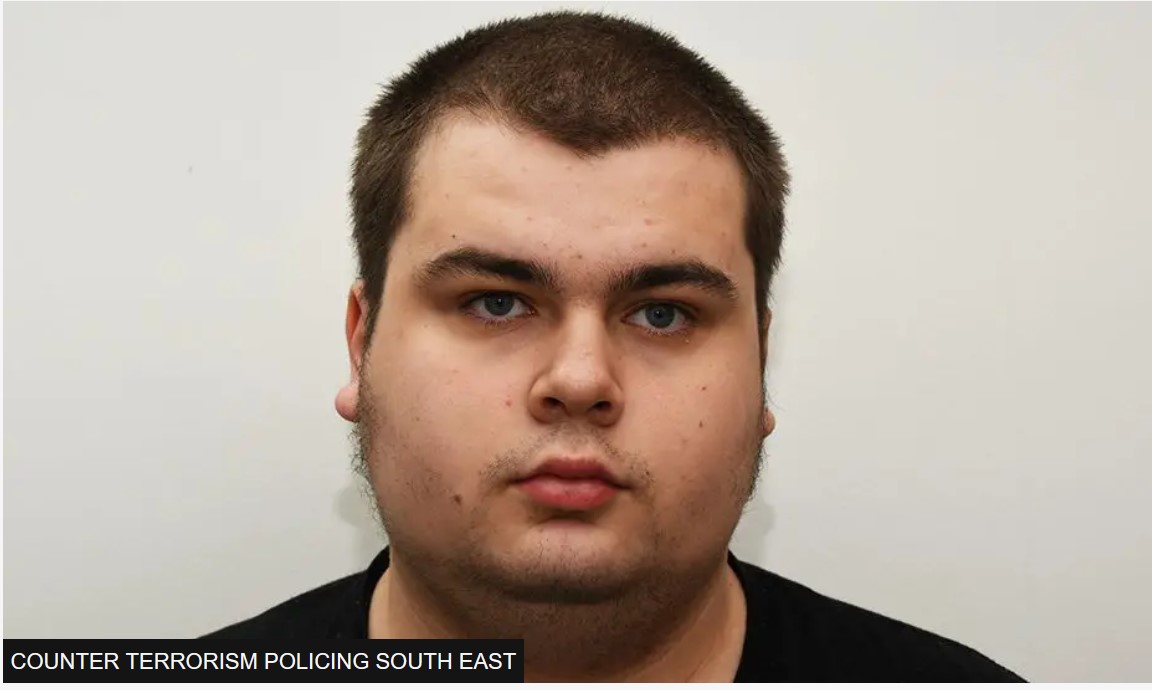
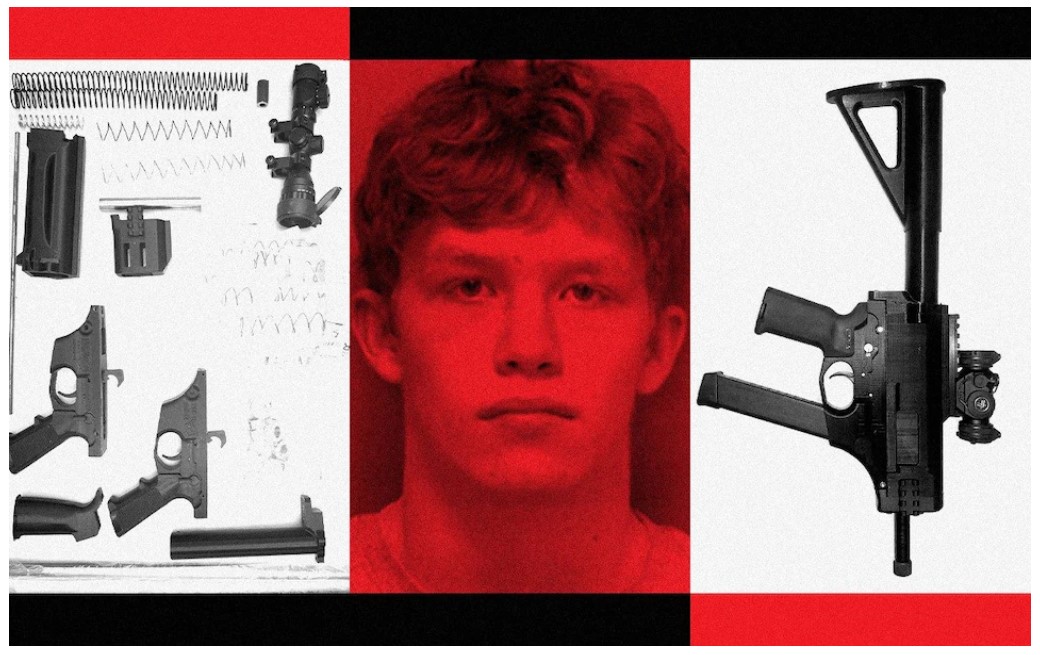
Jack Robinson, now 20, got to the ‘advanced stages’ of building a semi-automatic rifle
Jack Robinson, now 20, got to the ‘advanced stages’ of building a semi-automatic rifle
The FGC-9 first emerged in March 2020 when the manual was published online by a 3D firearms printing collective called Deterrence Dispensed.
The 110-page document took readers through the process in painstaking detail, from a list of the tools needed to step-by-step diagrams and a suggested manufacturing timeline.
Dr Rajan Basra, a researcher from the International Centre for the Study of Radicalisation who has studied the development of the FGC-9, says it was “groundbreaking”.
Although 3D-printed guns had been around since 2013, previous designs “weren’t reliable”, he explains. “You could maybe only fire a few shots, they could disintegrate. And the 3D-printed guns that were reliable and accurate needed off-the-shelf parts manufactured by gun companies, like the barrel.
“That is very difficult to get hold of outside of the US. So the FGC-9 was groundbreaking because it was the first time that you could have a reliable, semi-automatic, 9mm firearm that could be entirely made at home.”
But practical instruction was not all the guide provided – it was also an international call to arms. The author urged readers to build the FGC-9 as a “means to defend yourself and not be a victim to unjust firearm legislation any longer”, adding: “We together can defeat for good the infringement that is taking place on our natural-born right to bear arms, defend ourselves and rise up against tyranny at any time.”
The words were written by the FGC-9’s creator, who called himself JStark in tribute to General John Stark – a hero of the American Revolution – and adopted his slogan: “live free or die”.
The phrase was automatically etched into the side of the FGC-9 by the files released to make its 3D-printed parts, and JStark and fellow members of Deterrence Dispensed swiftly began publicising the manual across multiple online platforms.
JStark
JStark, who established an influential network of 3D-printed gun designers, pictured in 2020 Credit: Jacob Duygu
It took just eight months for it to emerge in a criminal case in Britain, when police found a teenage neo-Nazi called Matthew Cronjager had downloaded the manual as part of a terror plot.
He was attempting to recruit and arm a militia for coordinated attacks on targets including the UK government, Jews, gay people, Muslims and ethnic minorities, but was caught after unknowingly trying to pay an undercover police officer to manufacture the FGC-9.
At least 11 criminal cases involving people who downloaded the manual or attempted to make the gun have followed – five charged under terrorism laws, two under the Firearms Act and four as a mixture of both.
The cases indicate that the FGC-9 is particularly attractive to neo-Nazis and anti-government extremists, but the first known case of a jihadist downloading its manual emerged this month. Abdiwahid Abdulkadir Mohamed, a 32-year-old Londoner, was convicted of six terror offences for possessing the document and instructions for other homemade firearms.
Kingston Crown Court heard that he had obtained them from a channel on the encrypted Telegram messaging app, which was run by a prominent Slovakian neo-Nazi.
Mohamed’s own ideological sympathies lay in a very different direction, with records of his online activity showing him consuming material associated with Isis and al-Qaeda.
Prosecutor Martin Hackett said Mohamed had a “radical Islamic mindset” which was “directly related to the gathering of the 3D-printed firearm material”. Mohamed denied possessing material “useful to a person committing or preparing an act of terrorism” but was convicted of all six counts and will be sentenced in December.
Terror offenders are just one of several groups showing interest in the FGC-9, which has spread to at least 15 countries including Myanmar, where it is being used by anti-government groups fighting in the ongoing civil war.
Organised criminals in nations with strict gun control laws have meanwhile started manufacturing the weapon at a small scale, with a makeshift factory being busted in Spain in April 2021.
A year later, Australian police seized a complete weapon and homemade silencer in Perth, while in June 2023, an attempted assassination by a Marseilles drug gang was carried out with an FGC-9.
In August 2022, police arrested two men who were making the gun at home for criminal gangs, in the first case of its kind seen in the UK.
Because of the difficulty obtaining firearms in Britain, criminals have long resorted to adapting or attempting to make weapons. There has recently been a spike of criminals trying to adapt toy or imitation firearms for real use. But there are concerns that the increasing accessibility and falling price of 3D-printers, combined with the FGC-9’s detailed instruction manual, could make such attempts easier and cheaper.
The National Crime Agency says that although the weapon accounts for a “very small proportion of firearms cases overall”, illicit interest is growing.
“The NCA recognises the recent improvements in technology around 3D printing, the availability of online blueprints and advice, and is working closely with partners to mitigate this threat and suppress the availability of such weapons in the UK market,” a spokesman for the agency tells the Telegraph.
“Successful manufacture of such a weapon takes a high degree of skill and expertise, and in 2023 only five complete weapons were seized, of which only one was confirmed to be viable, out of a total of 25 cases.”
Some of those making the FGC-9, including a forklift driver found manufacturing the gun at his Birmingham home in 2020, have no discernible ideology or ambition to fire the weapon.
A gun you can make at home sounds like the stuff of science fiction, but a landmark sentencing today is a reminder that it has become a terrifying reality in the UK.
This afternoon (Monday Oct 14), a 20-year-old neo-Nazi who was at an “advanced stage” of building his own semi-automatic rifle and accompanying ammunition was jailed for six-and-a-half years.
When police arrested Jack Robinson, then 18, in February 2023, they also discovered a stash of military-style clothing, stab vests, balaclavas and German Second World War memorabilia at his home in Portsmouth.
Winchester Crown Court heard that while operating online under usernames including “kill all Jews”, the teenager had downloaded more than 500 documents containing information on explosives, weapons and 3D-printed guns, alongside a large volume of white supremacist propaganda.
Prosecutor Naomi Parsons said Robinson had been working on his rifle for months by the time he was arrested and “it was simply fortuitous that police found the gun before it had been completed and assembled”.
His case has shone a light on the growing problem of 3D-printed firearms, which threaten to enable British criminals to bypass strict gun control laws using online instructions.
And it was his weapon of choice, the FGC-9, which is beginning to pose a particular challenge for law enforcement in the UK and around the world.
Standing for F— Gun Control and the 9mm ammunition it fires, the semi-automatic rifle can be entirely manufactured at home, without commercially manufactured or regulated parts.
Neo-Nazi Jack Robinson’s stash of 9mm ammunition shown in trial images released by the Counter Terrorism Policing South East (CTPSE)
Jack Robinson’s stash of 9mm ammunition shown in trial images released by the Counter Terrorism Policing South East (CTPSE) Credit: CTPSE
Now thought to be the most popular gun of its kind globally, it has sparked particular concern among authorities because of the unprecedented detail contained within its instruction manual and the availability of all necessary materials, which dramatically lowers the bar for construction compared to previous homemade firearms.
With a 3D printer, everyday materials and tools, and some metalworking skills, anyone can now make the high-powered weapon in their living room or garage, like a deadly Airfix model.
As a result, over the four years since the design was first released, the FGC-9 has spread from obscure pro-gun internet forums into the hands of criminals, terrorists and insurgents across five continents.
But its appeal is not just attributed to its practical effectiveness – the FGC-9 is also an ideological project designed by its creator to inspire people around the world to make guns in defiance of “tyrannical” governments.
3D Printed FGC-9
The 3D Printed FGC-9 (F*ck Gun Control 9MM) gun can be made using everyday materials and tools Credit: Alamy
While it has been especially popular in mainland Europe, the weapon has made steady inroads in Britain, too.
The Robinson case marks one of more than a dozen instances in the past four years in which British criminals and terror offenders have been charged with either trying to build the FGC-9 or possessing its instruction manual.
Several were aspiring to commit mass shootings with the weapon, while others have been seeking to manufacture it as a criminal enterprise to sell onto gangs, or apparently just building it as a hobby. The FGC-9 has become so desirable among the far-Right, in particular, that authorities now prosecute the possession and sharing of its instruction manual as a standalone terror offence.
In Robinson’s case, he pleaded guilty to attempting to manufacture a firearm, possessing prohibited parts and three counts of possessing material useful to a terrorist – including the FGC-9 manual. The court heard how the “isolated” defendant had dropped out of sixth-form college and had few friends.
Sentencing Robinson as his mother loudly sobbed in the court’s public gallery, a judge ruled that he was a dangerous offender, although he claimed he did not intend to use the gun beyond “testing” it.
“I find you were motivated by terrorism,” Mrs Justice McGowan told Robinson, as he stood impassively wearing a crisp blue shirt. “Your interest in firearms has to be viewed in connection with the mindset material found. That material found glorifies the killing of Jews.”
Robinson also admitted four other offences relating to 810 indecent images of children, which police found while examining his computer and hard drive.
Jack Robinson, now 20, got to the ‘advanced stages’ of building a semi-automatic rifle
Jack Robinson, now 20, got to the ‘advanced stages’ of building a semi-automatic rifle
The FGC-9 first emerged in March 2020 when the manual was published online by a 3D firearms printing collective called Deterrence Dispensed.
The 110-page document took readers through the process in painstaking detail, from a list of the tools needed to step-by-step diagrams and a suggested manufacturing timeline.
Dr Rajan Basra, a researcher from the International Centre for the Study of Radicalisation who has studied the development of the FGC-9, says it was “groundbreaking”.
Although 3D-printed guns had been around since 2013, previous designs “weren’t reliable”, he explains. “You could maybe only fire a few shots, they could disintegrate. And the 3D-printed guns that were reliable and accurate needed off-the-shelf parts manufactured by gun companies, like the barrel.
“That is very difficult to get hold of outside of the US. So the FGC-9 was groundbreaking because it was the first time that you could have a reliable, semi-automatic, 9mm firearm that could be entirely made at home.”
But practical instruction was not all the guide provided – it was also an international call to arms. The author urged readers to build the FGC-9 as a “means to defend yourself and not be a victim to unjust firearm legislation any longer”, adding: “We together can defeat for good the infringement that is taking place on our natural-born right to bear arms, defend ourselves and rise up against tyranny at any time.”
The words were written by the FGC-9’s creator, who called himself JStark in tribute to General John Stark – a hero of the American Revolution – and adopted his slogan: “live free or die”.
The phrase was automatically etched into the side of the FGC-9 by the files released to make its 3D-printed parts, and JStark and fellow members of Deterrence Dispensed swiftly began publicising the manual across multiple online platforms.
JStark
JStark, who established an influential network of 3D-printed gun designers, pictured in 2020 Credit: Jacob Duygu
It took just eight months for it to emerge in a criminal case in Britain, when police found a teenage neo-Nazi called Matthew Cronjager had downloaded the manual as part of a terror plot.
He was attempting to recruit and arm a militia for coordinated attacks on targets including the UK government, Jews, gay people, Muslims and ethnic minorities, but was caught after unknowingly trying to pay an undercover police officer to manufacture the FGC-9.
At least 11 criminal cases involving people who downloaded the manual or attempted to make the gun have followed – five charged under terrorism laws, two under the Firearms Act and four as a mixture of both.
The cases indicate that the FGC-9 is particularly attractive to neo-Nazis and anti-government extremists, but the first known case of a jihadist downloading its manual emerged this month. Abdiwahid Abdulkadir Mohamed, a 32-year-old Londoner, was convicted of six terror offences for possessing the document and instructions for other homemade firearms.
Kingston Crown Court heard that he had obtained them from a channel on the encrypted Telegram messaging app, which was run by a prominent Slovakian neo-Nazi.
Mohamed’s own ideological sympathies lay in a very different direction, with records of his online activity showing him consuming material associated with Isis and al-Qaeda.
Prosecutor Martin Hackett said Mohamed had a “radical Islamic mindset” which was “directly related to the gathering of the 3D-printed firearm material”. Mohamed denied possessing material “useful to a person committing or preparing an act of terrorism” but was convicted of all six counts and will be sentenced in December.
Terror offenders are just one of several groups showing interest in the FGC-9, which has spread to at least 15 countries including Myanmar, where it is being used by anti-government groups fighting in the ongoing civil war.
Organised criminals in nations with strict gun control laws have meanwhile started manufacturing the weapon at a small scale, with a makeshift factory being busted in Spain in April 2021.
A year later, Australian police seized a complete weapon and homemade silencer in Perth, while in June 2023, an attempted assassination by a Marseilles drug gang was carried out with an FGC-9.
In August 2022, police arrested two men who were making the gun at home for criminal gangs, in the first case of its kind seen in the UK.
Because of the difficulty obtaining firearms in Britain, criminals have long resorted to adapting or attempting to make weapons. There has recently been a spike of criminals trying to adapt toy or imitation firearms for real use. But there are concerns that the increasing accessibility and falling price of 3D-printers, combined with the FGC-9’s detailed instruction manual, could make such attempts easier and cheaper.
The National Crime Agency says that although the weapon accounts for a “very small proportion of firearms cases overall”, illicit interest is growing.
“The NCA recognises the recent improvements in technology around 3D printing, the availability of online blueprints and advice, and is working closely with partners to mitigate this threat and suppress the availability of such weapons in the UK market,” a spokesman for the agency tells the Telegraph.
“Successful manufacture of such a weapon takes a high degree of skill and expertise, and in 2023 only five complete weapons were seized, of which only one was confirmed to be viable, out of a total of 25 cases.”
Some of those making the FGC-9, including a forklift driver found manufacturing the gun at his Birmingham home in 2020, have no discernible ideology or ambition to fire the weapon.
FGC-9
There are concerns that the accessibility of 3D-printers combined with the FGC-9’s detailed instruction manual will lead to more cases of at-home gun making in Britain Credit: Alamy
“People can get involved in making the gun because they’re just looking to experiment,” Dr Basra says. “But with time, they become more familiar with the ideology behind the FGC-9 and may come to adopt that worldview. It is ingrained in that design – by the name alone, and having on the side of the gun as its design the words: live free or die.”
The slogan was absent from an updated version of the design, the FGC-9 MKII, which was released online in April 2021, but soon events would unfold that would broadcast its designer’s vision to the world.
JStark, who was identified by Dr Basra as a German national of Kurdish origin named Jacob Duygu, was arrested by police in June 2021. Two days later, he was found dead in a car parked outside his parents’ home in Hannover, at the age of 28.
An official autopsy ruled out “foul play or suicide” but failed to determine the cause of his death, triggering a wave of rage and conspiracy theories when the news reached the 3D-printed gun community.
“JStark’s death made him a martyr within the movement,” Dr Basra says. “He was seen as an example of someone who was really willing to risk his life, risk imprisonment, for the sake of everyone worldwide having access to DIY guns. I think that inspired just as many, if not more, people in death as it did when he was alive.”
Dr Basra’s s research uncovered not just JStark’s true identity, but his carefully hidden political sympathies and mental health issues. Duygu was an incel, standing for involuntary celibate, an online subculture in which men bemoan their inability to find a sexual partner, often resorting to extreme misogyny as a consequence. He had considered moving to the Philippines in the belief it would help him get a girlfriend. Dyugu was depressed and frequently talked of suicide, while identifying himself as autistic.
The sad reality was far from the image of a Second Amendment-loving hero he projected as JStark online, where he was lionised after appearing in a 2020 documentary wearing a black balaclava and military-style clothing while unloading an FGC-9 in a forest.
“I have a responsibility to make sure everybody has the option to be able to get a gun,” he stated, with his voice electronically modified into a deep crackle. “The way they use it is up to them.”
Conspiracy theories sparked by Duygu’s death turbocharged his narrative of state “tyranny”, with supporters vowing to make the FGC-9 in his memory, while news coverage of his death brought the weapon to international attention.
Interpol, the international law enforcement body, believes it is now the world’s most popular 3D-printed weapon, and it has inspired several adaptations. They include an FGC-type weapon photographed being brandished by members of Real IRA splinter group Óglaigh na hÉireann at a 2022 Easter parade in Belfast.
Dr Basra says the gun has now “taken off” and is spreading so rapidly that authorities must consider “concrete steps to reduce the prevalence of these designs and tackle people that are trying to make these guns in the UK”.
Possession of the FGC-9’s manual is now being charged as a terror offence in Britain, but success requires prosecutors to prove an ideological mindset that those possessing the instructions for purely criminal purposes are unlikely to have.
Without that, those seeking to make the gun can only be prosecuted if they have already made component parts that breach the Firearms Act 1968.
The FGC-9 case is an example of how traditional regulation has failed to keep pace with modern technology. Plans and manuals can be freely distributed online, and 3D-printers, which use an additive process to produce 3D models, have enabled production processes once associated with factories to be carried out in our homes.
In theory, this was a boon for those keen to develop prototypes capable of improving our day-to-day lives, but it was not long before people adapted the technology to more dubious ends. The first 3D-printed gun emerged in 2013. Called The Liberator, it was the brainchild of Cody Wilson, an American pro-firearms activist. Since then, there have been countless models. In 2021, a Florida gun range held a competition for 3D-printed weapons.
JStark’s FGC-9
In November 2023, the Conservative government brought forward laws which would have made possessing 3D-printed gun manuals an offence as “articles for use in serious crime”, but the Criminal Justice Bill did not finish its passage through parliament before the general election was called.
Talking to the Telegraph, a Home Office spokesman says the Government is committed to pursuing the legislation. “A 3D printed firearm is subject to the law in the same way as any other firearm. The maximum penalty for possessing a prohibited weapon is ten years imprisonment, with a minimum penalty of five years.”
“We will introduce new laws to criminalise owning with the intention to be used for crime, supplying and offering to supply templates or manuals for 3D printed firearms components.”
Authorities hope that the threat from the FGC-9, in particular, will be suppressed by the difficulty of obtaining the 9mm ammunition it fires. Although one of the weapon’s co-designers has released a manual for homemade bullets, which was used by Robinson, the level of complexity involved is significant.
Still, Dr Basra warns that the FGC-9 manual remains “shockingly available” online, alongside countless social media posts and videos showing how to create it and advertising the design. “There’s limits to what authorities can do,” he warns. “This gun is designed to be made by anyone without being detected.”
Robinson will not be making any more weapons at home for a while. But as 3D printers become cheaper and more ubiquitous, you can be sure he will not be the last person to try.
Daily Telegraph

 Far-Right Criminals